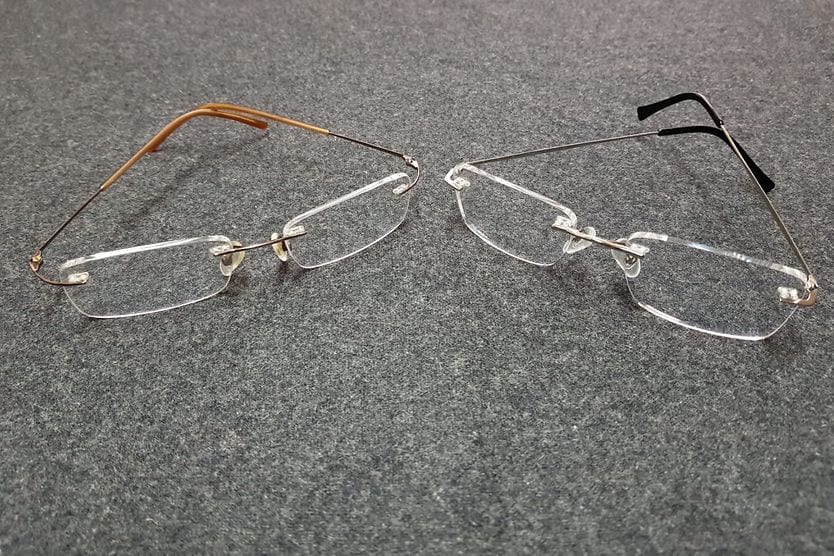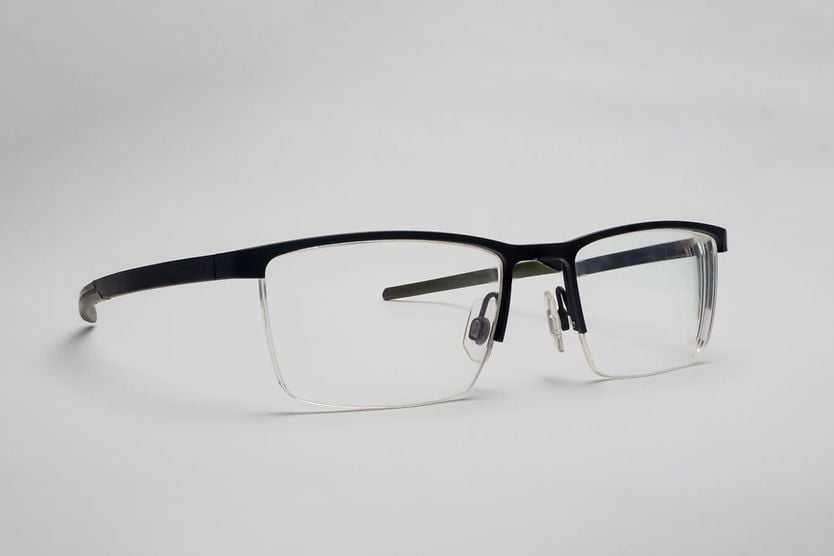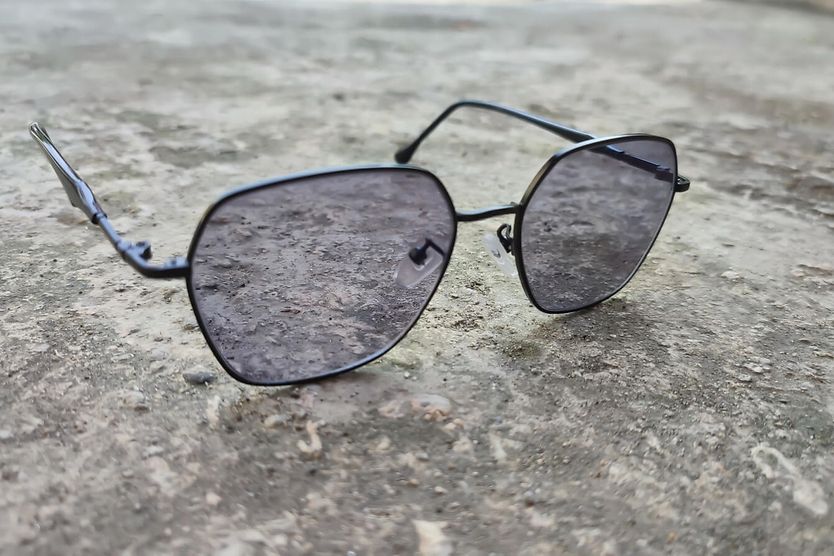
Do you have 20/20 vision when you wear your glasses but still feel dissatisfied with how you see?
Sometimes, higher-order aberrations can affect your vision, even if your prescription eyeglasses fully correct your nearsightedness, farsightedness and/or astigmatism. These aberrations may be due to the optical characteristics of your eyes or may be caused by the optical limitations of conventional eyeglass lenses.
Recent advances in lens manufacturing have made possible new high-definition eyeglass lenses that correct these aberrations, potentially giving you sharper vision than many other types of eyeglasses. These lenses are designed to provide sharper vision in all lighting conditions by potentially reducing glare for nighttime driving and other night vision tasks.
Many brands of high-definition eyeglass lenses currently are available, including high-definition versions of high-index lenses, progressive lenses and photochromic lenses.
Keep in mind that for optimal vision and comfort, high-definition lenses with anti-reflective (AR) coating may eliminate distracting reflections.
SEE RELATED: Polycarbonate vs. High-Index Lenses
Free-form lenses
A popular type of high-definition eyeglass lenses are called free-form lenses. The term "free-form" refers to an advanced manufacturing process that reduces higher-order aberrations such as spherical aberration that occur in eyeglass lenses created with traditional eyeglass lens manufacturing tools and processes.
High-definition lenses are designed to provide sharper vision in a variety of conditions and reduce glare for nighttime driving.
With free-form lenses (also called digital high-definition lenses), the fabrication of the lenses from wearer's eyeglass prescription is optimized with computer-controlled surfacing equipment that may be more precise than conventional tools.
In fact, free-form technology can surface lenses in power increments of 0.01 diopter (D), compared with 0.125 to 0.25 D increments of conventional eyeglass lens tooling.
The fabrication of some digital, free-form lenses also takes into account how the lenses are positioned in front of the wearer's eyes when in the eyeglass frame in order to provide accurate lens power and sharp vision.
Other factors that may be considered in the lens customization process include the angle between the eye and the back surface of the lens in different gaze positions (for example, when the wearer is looking off to the side rather than straight through the center of the lens), the frame size and the position of the wearer's pupil within the frame outline.
With these and possibly other factors taken into account during lens design and fabrication, high-definition eyeglass lenses offer an unprecedented degree of customization and may reduce or eliminate certain higher-order aberrations.
The precisely made and personalized surfaces of high-definition lenses may help reduce aberrations that limit field of view and cause starbursts, halos and comet-shaped distortions of lights at night.
The result is that high-definition lenses may provide sharper image quality, enhanced peripheral vision, improved contrast sensitivity and less glare at night.
Because creating high-definition lenses requires additional information beyond what is recorded on your eyeglass prescription, an optician usually will take additional measurements when you choose your eyeglass frames.
Sometimes, a proprietary measuring device is used for fitting and fabricating a specific brand of free-form, high-definition lenses.
Wavefront lenses
Some lens manufacturers have introduced an even more customized type of high-definition eyeglass lenses called wavefront lenses.
Wavefront lenses are created with the help of the same sophisticated technology used to measure the optics of the eye prior to custom, wavefront-guided LASIK eye surgery: A computerized instrument projects uniform light waves into the eye, which reflect off the retina, and the returning "wavefront" of light is analyzed to evaluate optical imperfections — not just refractive errors, but higher-order aberrations as well.
In custom LASIK, these wavefront measurements are used to program the excimer laser to reshape the front surface of the eye. In wavefront eyeglass lenses, the measurements drive a computer-controlled manufacturing process that creates customized, high-definition lenses.
Are you a candidate for high-definition lenses?
Virtually anyone who wears eyeglasses is a good candidate for high-definition eyeglass lenses, but individuals with higher refractive errors may notice greater benefits than people with only mild prescriptions.
A possible indicator that high-definition eyeglass lenses might be a good choice is if an optometrist or ophthalmologist says you have healthy eyes and 20/20 vision, but you are bothered by glare or your vision seems indistinct.
If you are dissatisfied with the clarity of your eyesight with your current glasses, ask an eye care professional if high-definition eyeglass lenses might provide sharper vision.
Cost of high-definition lenses
Because of the sophisticated technology used to design and fabricate free-form and wavefront lenses and the added time and equipment required to fit them, high-definition eyeglass lenses may cost more, compared with conventional lenses of the same material and design.
Though high-definition lenses cost more than conventional eyeglass lenses, many people who try them — particularly wearers who've been frustrated by a lack of crisp vision with glasses in the past — find free-form and wavefront lenses produce a noticeable improvement in clarity and comfort.