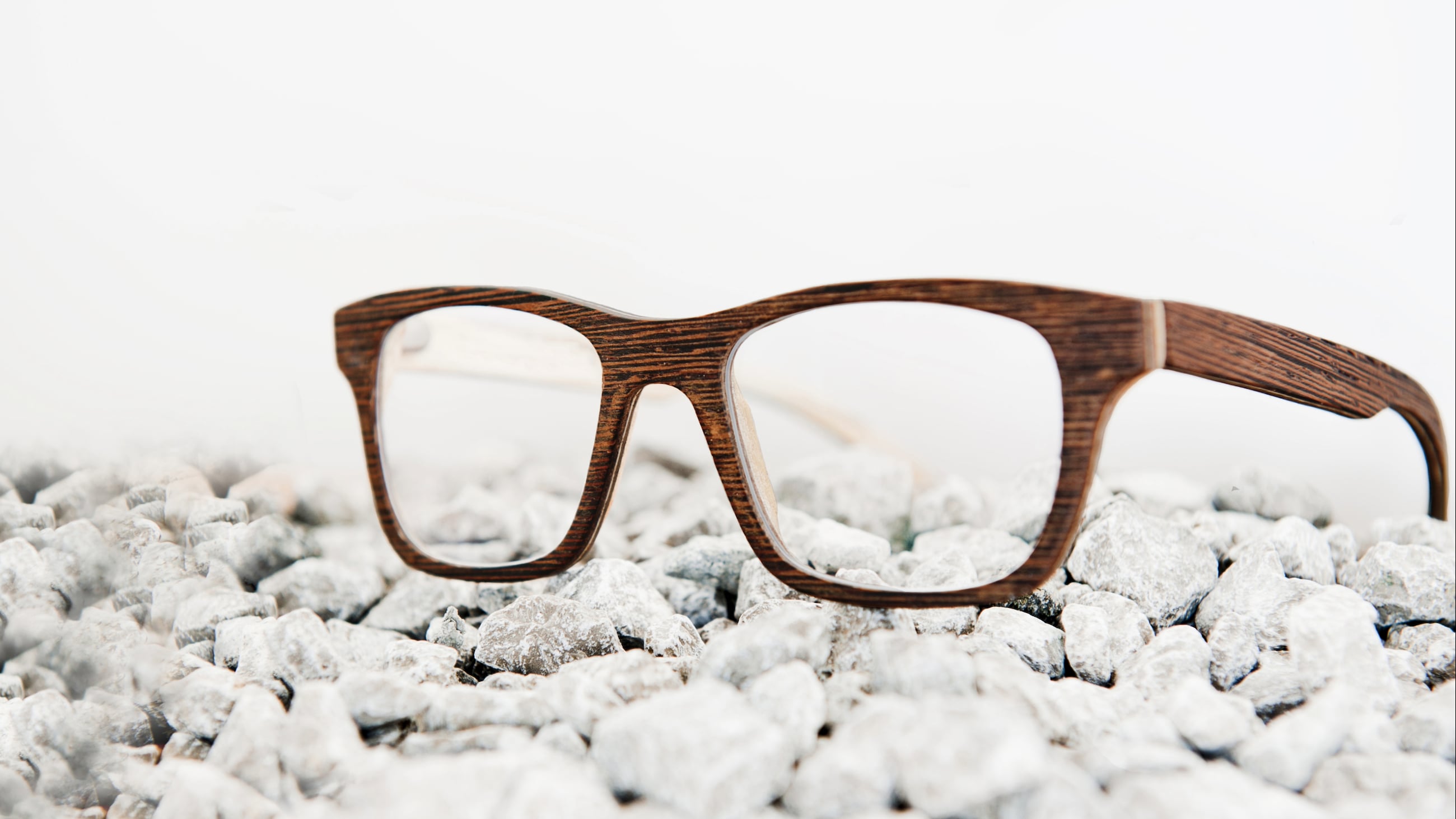
Eyeglass Frames: It's a Material World

By Erinn Morgan; updates by Gina White

What are you looking for in eyeglass frames? A wide range of available colors? Durability? Lightness on your face? Hypoallergenic materials? A good price? Uniqueness?

Finding eyeglasses with the qualities that are most important to you is as simple as choosing a frame material: each one comes with its own unique set of strengths that makes it distinct.

Plastic

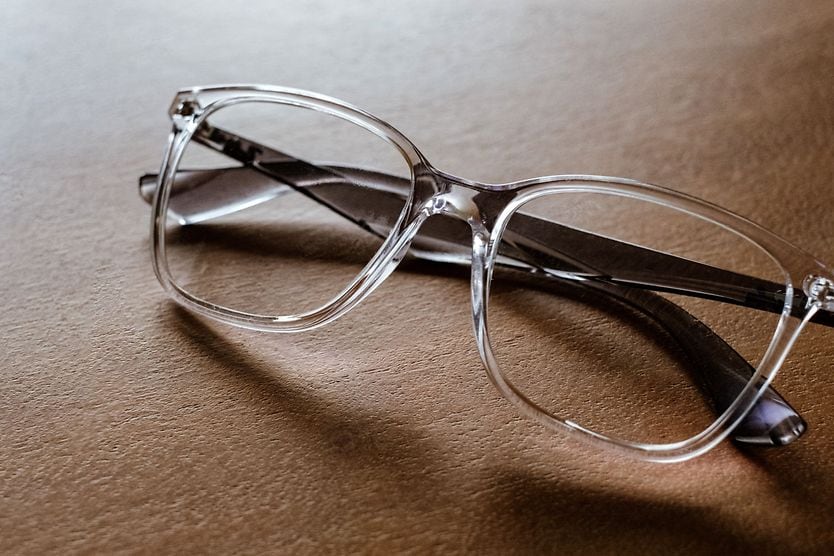
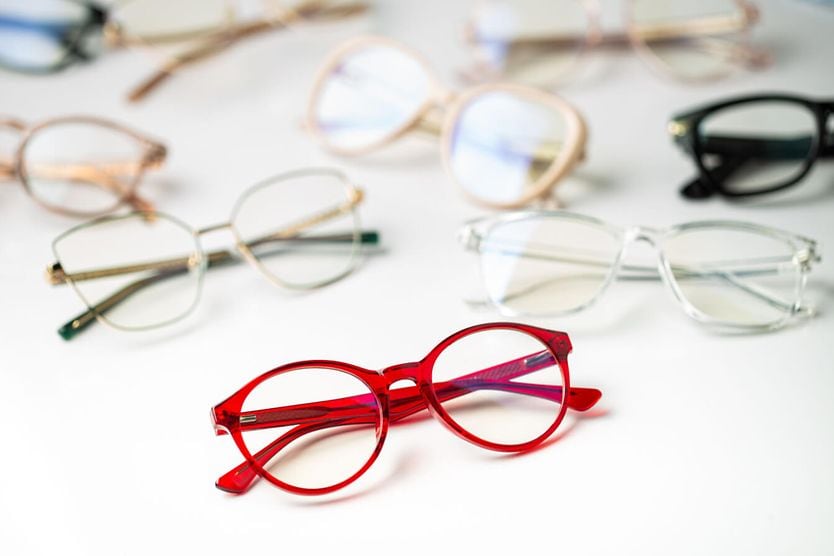
If you want the colors of the rainbow, then zyl (zylonite, or cellulose acetate) is your material. Zyl is a very cost-effective and creative option for eyewear and is extremely lightweight. Particularly popular right now are laminated zyl frames that have layered colors.

Some manufacturers are also using propionate — a nylon-based plastic that is hypoallergenic. It's lightweight and has a different look and feel than other plastics.

These sunglasses are mostly nylon, with stainless steel hinges for strength. Model Vestra, by Lazi.

This sunglass is mostly nylon, with stainless steel hinges for extra strength. Vestra, by Lazi.
 

Eyeglasses made of nylon were first introduced in the late 1940s. Because of brittleness and other problems, eyeglass manufacturers switched to blended nylon (polyamides, co-polyamides and gliamides). Today's blended nylon frames are both strong and lightweight.

Nylon is also a premier material for sports and performance frames — typically made of gliamides, which are very resistant to hot and cold and are more flexible, yet also stiff. Nylon is also easily molded into today's popular wraparound styles, as well as other shapes that are difficult to produce.

Plastic frames do have some drawbacks. They are easier to break than metal frames, they will burn (but are not easily ignited), and aging and exposure to sunlight slightly decrease their strength but do not affect color.

Everlast Eyewear style no. 800

Titanium used to come only in silver-gray, but now many colors are available. This is an Everlast frame.
 

Metal

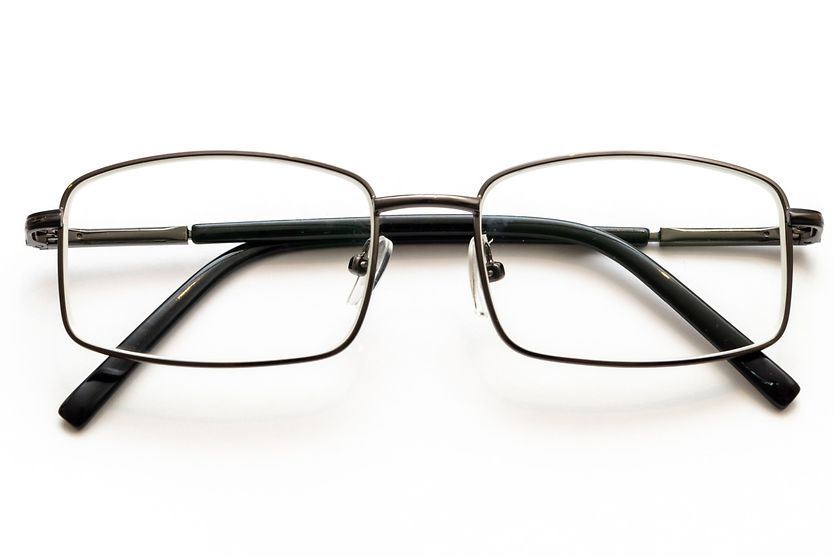
Monel — a mixture of any of a broad range of metals — is the most widely used material in the manufacture of eyeglass frames. It is malleable and corrosion-resistant — especially if the right kind of plating, such as palladium or other nickel-free options, is used.

Frame manufacturers are coming out with more and more titanium styles these days; titanium is a silver-gray metal that's lightweight, durable, strong and corrosion-resistant. It has been used for everything from the Gemini and Apollo space capsules to medical implants such as heart valves. Titanium eyewear can be produced in a variety of colors for a clean, modern look with a hint of color.

Not all titanium frames are 100 percent titanium. Some are made from an alloy that is a combination of titanium and other metals, such as nickel or copper. In general, titanium alloy frames cost less than 100 percent titanium frames.

These sunglasses have a beryllium frame with polycarbonate lenses. Lazi Eights, by Lazi.

The figure-8 frame on these Lazi sunglasses is made of beryllium.
 

Beryllium, a steel-gray metal, is experiencing increased popularity as a lower-cost alternative to titanium eyewear. It resists corrosion and tarnish, making it an excellent choice for wearers who have high skin acidity or spend a good amount of time in or around salt water. It's also lightweight, very strong, very flexible (making it easy for an optician to adjust your glasses) and available in a wide range of colors.

Stainless steel frames are another alternative to titanium. Qualities of stainless steel frames include light weight, low toxicity and strength; many stainless steel frames are also nickel-free and thus hypoallergenic. Stainless steel is readily available and reasonably priced. It's an alloy of steel and chromium; it may also contain another element. Most stainless steels contain anywhere from 10 to 30 percent chromium, which imparts an excellent resistance to corrosion, abrasion and heat.

Relatively new to the eyewear market, Ticral is an alloy of titanium, copper and chrome. It is nickel-free and thus hypoallergenic. It's also extremely lightweight and offers many of the features of titanium without the high cost. It can be cut a bit thicker than titanium, which enables it to have the popular look of a thin plastic frame while still offering light weight. The material is also strong, durable and available in a variety of colors.
 

Contact Lenses

LASIK & Vision Surgery

Eyeglasses

Sunglasses

Eye Exams

Problems & Diseases

  Cataracts

  Glaucoma

  Macular Degeneration

  Other Diseases

Vision Insurance

Low Vision

Computer Vision

Sports Vision

Nutrition & Eyes

Buy Smarter

Vision Over 40

Vision Over 60

Children's Vision

Teens

Resources

Home

Coppertone polarized lenses: Protect your eyes with America's most trusted suncare brand

Tears Again advanced Liposome Eyelid Spray is ideal for patients who have trouble using eye drops

Your eyelids may be causing your dry, scratchy and irritated eyes. Learn more

Similasan eye drops relieve and soothe dry eyes, pink eye and allergy eyes

Bothered by blurry vision? New Blur Relief eye drops naturally refresh dry, irritated eyes


Kevin James is wearing Flexon Select style 1117 eyeglasses in bronze by Marchon.

Kevin James of The King of Queens is wearing Flexon Select style 1117 in bronze.
 

Flexon is a titanium-based alloy. This unique and popular material, which is proprietary to the eyeglass manufacturer Marchon, is called a "memory metal" because it can go back to its original shape if damaged. Frames made of Flexon come back into shape even after twisting, bending and crushing. Flexon frames are lightweight, hypoallergenic and corrosion-resistant.

"Since Flexon easily goes back into the shape the dispenser originally gave it, it ultimately makes for a better frame and fit," said Dave Chure, executive vice president of Marchon. "Flexon is also about 25 percent lighter in weight than standard metals so you get much less weight on the face."

Frames made from aluminum are lightweight and highly corrosion-resistant. Aluminum is used primarily by high-end eyewear designers because of the unique look it creates. Aluminum is not only the world's most abundant, but also the most widely used, nonferrous material. Pure aluminum is actually soft and weak, but commercial aluminum with small amounts of silicon and iron is hard and strong.

Allergic to Eyeglass Frames?

Do certain frame or nose pad materials irritate your skin? Tell your eye doctor, so he or she can help you find eyeglasses you can wear comfortably. Here's the lowdown on materials:
 
If metal frames cause a reaction, nickel's usually the culprit: most metal frames are made of a nickel alloy. Other metals used include: aluminum, stainless steel, titanium, zinc, copper, beryllium, gold and silver. Stainless, titanium, gold and silver are usually hypoallergenic.
 
Some people are allergic to the nose pads on metal frames. Most are made of silicone or acetate, but they can also be made out of polyvinyl chloride (PVC), nickel, titanium or rubber. Silicone is tricky: certain silicones are hypoallergenic (such as medical silicone), but others can trigger allergic reactions. Both PVC and titanium are usually hypoallergenic.
 
Most plastic glasses are made of zyl (also called zylonite, acetate and cellulose acetate) or propionate. Other materials used in plastic frames include: polyamide, nylon, polycarbonate, carbon and Optyl (a brand of epoxy resin). Propionate, polyamide, nylon and Optyl frames are all considered hypoallergenic. — G.W.

Unusual Frame Materials

Want a distinctive style? Willing to pay for it? Try eyeglass frames or design accents made from these materials. High-end optical boutiques will be the best hunting grounds for finding this unique and sometimes pricey eyewear.

Hana 609 semi-rimless eyeglasses in Midnight with Black Onyx semi-precious stones. Also: Diesel sunglasses made of wood, called Woodpecker. Comes in three different wood colors. Click here for closeups.

Eyeglasses adorned with semi-precious stones and a sunglass made of wood. Click on photos for closeups and style names.
 

Solid silver or sterling silver is not commonly used as a main frame material because it doesn't make very wearable or comfortable frames. Silver is sometimes used as a trace element in metal alloy frames, and is often used as a jewelry-like accent on plastic frames.

Some companies make gold eyewear, typically gold plating rather than solid gold. Like silver, gold can also be used for accenting plastic or metal frames.

Wood and bone frames are usually handmade, one-of-a-kind pieces that satisfy a specialty niche. Although stiffer and less adjustable than other frame materials, plus much more expensive, wood and bone redeem themselves as frame materials because of their unique look and beauty.

Often used on temples or even across frame fronts, leather is not as durable or practical as other materials used for accenting, but it provides an interesting and fashionable look.

Semi-precious or precious stones are sometimes used as accents in frames, especially in the temples. Popular choices are onyx and turquoise, but even diamonds can be used, for a luxurious touch. Such designs are usually worn in a formal office or on dressy occasions. Rhinestones are a less expensive alternative and are often used to create a flashy or retro look, especially in upturned cateye frames.

[Page updated June 2006]

Coppertone polarized lenses: Protect your eyes with America's most trusted suncare brand

Tears Again advanced Liposome Eyelid Spray is ideal for patients who have trouble using eye drops

For dryness and irritation caused by eyelid problems, learn about OCuSOFT Lid Scrub

Similasan eye drops relieve and soothe dry eyes, pink eye and allergy eyes

Bothered by blurry vision? New Blur Relief eye drops naturally refresh dry, irritated eyes

Reproduction of any images or text from this website is prohibited by copyright law. Please read our copyright infringement policy.

Link Colors: Green = glossary terms, Blue = other pages
 
All About Vision is a registered service mark of Access Media Group LLC.
Copyright 2000-2008 Access Media Group LLC.

This website is accredited by Health On the Net Foundation. Click to verify.

We comply with the
HONcode standard for
trustworthy health
information:
verify here.