Hyperopia (Are you farsighted?): Symptoms and treatment

Schedule an exam
Find Eye DoctorHyperopia, or farsightedness, is a common vision problem, affecting about a fourth of the population. People with hyperopia can see distant objects very well, but have difficulty focusing on objects that are up close. The condition is sometimes referred to as "hypermetropia" rather than hyperopia.
Hyperopia symptoms
Farsighted people sometimes have headaches or eye strain and may squint or feel fatigued when performing work at close range. If you get these symptoms while wearing your eyeglasses or contact lenses, you may need an eye exam and a new prescription.
What causes hyperopia/hypermetropia?
Watch this video on what causes blurry vision and how we can correct it.
This vision problem occurs when light rays entering the eye focus behind the retina, rather than directly on it. The eyeball of a farsighted person is shorter than normal.
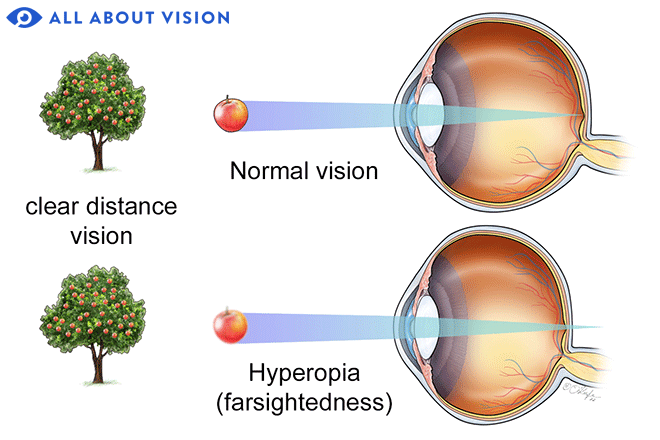
Illustrated by Laurie O'Keefe
Many children are born farsighted, and some of them "outgrow" it as the eyeball lengthens with normal growth.
Sometimes people confuse hyperopia with presbyopia, which also causes near vision problems but for different reasons.
Hyperopia treatment
Farsightedness can be corrected with glasses or contact lenses to change the way light rays bend into the eyes.
If your glasses or contact lens prescription begins with plus numbers, like +2.50, you are farsighted.
You may need to wear your glasses or contacts all the time or only when reading, working on a computer or doing other close-up work.
When selecting eyeglasses for the correction of farsightedness, choose aspheric high-index lenses — especially for stronger prescriptions. These lenses are thinner, lighter, and have a slimmer, more attractive profile. Aspheric lenses also reduce the magnified "bug-eye" appearance eyeglasses for hyperopia often cause.
Be aware, though, that high-index aspheric lenses reflect more light than standard plastic lenses. For the best comfort and appearance, make sure the lenses include anti-reflective coating, which eliminates distracting lens reflections.
High-index aspheric lenses for children should be made of lightweight polycarbonate lens material for superior comfort and impact resistance.
Also, photochromic lenses that automatically darken in response to sunlight are highly recommended for kids and anyone who spends a significant amount of time outdoors.
Refractive surgery, such as LASIK or CK, is another option for correcting hyperopia. Surgery may reduce or eliminate your need to wear glasses or contact lenses.
Investigational procedures involving corneal implants may be a future option for correcting hyperopia.
READ NEXT: What is ametropia?
Judith Lee also contributed to this article.
Page published on Monday, March 4, 2019