Night Vision and Driving:
How Safe Are Older Motorists?

By Sean McKinney;
reviewed by Dr. Gary Heiting

See also:

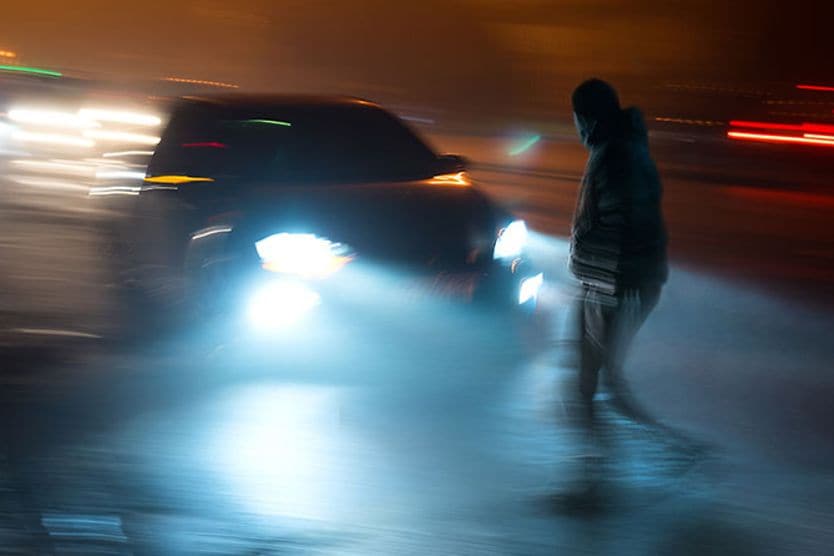
Fading night vision can be a serious traffic hazard, particularly among older motorists who drive after dark.

Because people now in their 50s and older will likely maintain active lifestyles during the next few decades, a record number of senior drivers will be on roadways in the years ahead.

Unfortunately, lax vision screening requirements for driver's license renewals in many states mean significant numbers of drivers in this age group may not be seeing their eye doctor frequently enough to insure their vision is adequate for safe driving.

To make matters worse, age-related eye problems such as cataracts can develop so slowly that older drivers may be unaware that their vision is declining.

Accidents and Older Drivers

While older drivers may generally be more at risk of having accidents, U.S. Centers for Disease Control (CDC) statistics show that young motorists are more likely to be involved in traffic accidents causing death.

Older drivers with cataracts or other eye problems often have difficulty with night vision. Click here for more information on cataracts.

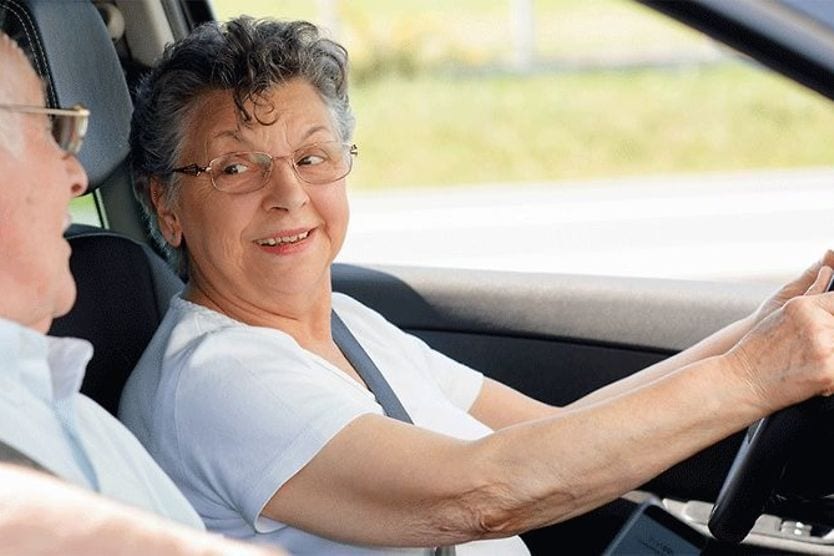
Extra safety precautions may be needed if you are an older driver.
 

But an American Medical Association (AMA) statement notes that the large number of senior drivers is still a public health issue, because of age-related declines in vision, cognition, and motor function. According to the AMA, these factors make older drivers "vulnerable to crashes in complex situations that require good visual perception, attention, and rapid response."

The National Highway Traffic Safety Administration says 6,512 people — 15 percent of all Americans who were killed on the road in 2005 — were 65 or older. That percentage is expected to keep climbing as the number of older Americans increases.

Motor vehicle crashes are also the leading cause of injury in adults between 65 and 75 years old, and the second leading cause of injury to those 75 or older, according to the CDC.

Two other disturbing facts:

  1. When measured by crashes per mile driven, data show a substantial rise in crashes by drivers over age 70, according to the American Association of Retired Persons.
     
  2. The National Safety Council says traffic death rates are three times greater at night than during the day. As aging Baby Boomers continue to take to the roads at night in greater numbers than their parents, the risk of fatal crashes is expected to increase substantially.

Why Is Aging and Night Driving a Problem?

As we age, our eyes usually begin to fail long before we notice it. Consider:
 

Contact Lenses

LASIK & Vision Surgery

Eyeglasses

Sunglasses

Eye Exams

Problems & Diseases

  Cataracts

  Glaucoma

  Macular Degeneration

  Other Diseases

Vision Insurance

Low Vision

Computer Vision

Sports Vision

Nutrition & Eyes

Buy Smarter

Vision Over 40

Vision Over 60

Children's Vision

Teens

Resources

Home

Learn about your vision after 40 and Acuvue Bifocal Contact Lenses

Tears Again advanced Liposome Eyelid Spray is ideal for patients who have trouble using eye drops

Your eyelids may be causing your dry, scratchy and irritated eyes. Learn more

Bothered by blurry vision? New Blur Relief eye drops naturally refresh dry, irritated eyes


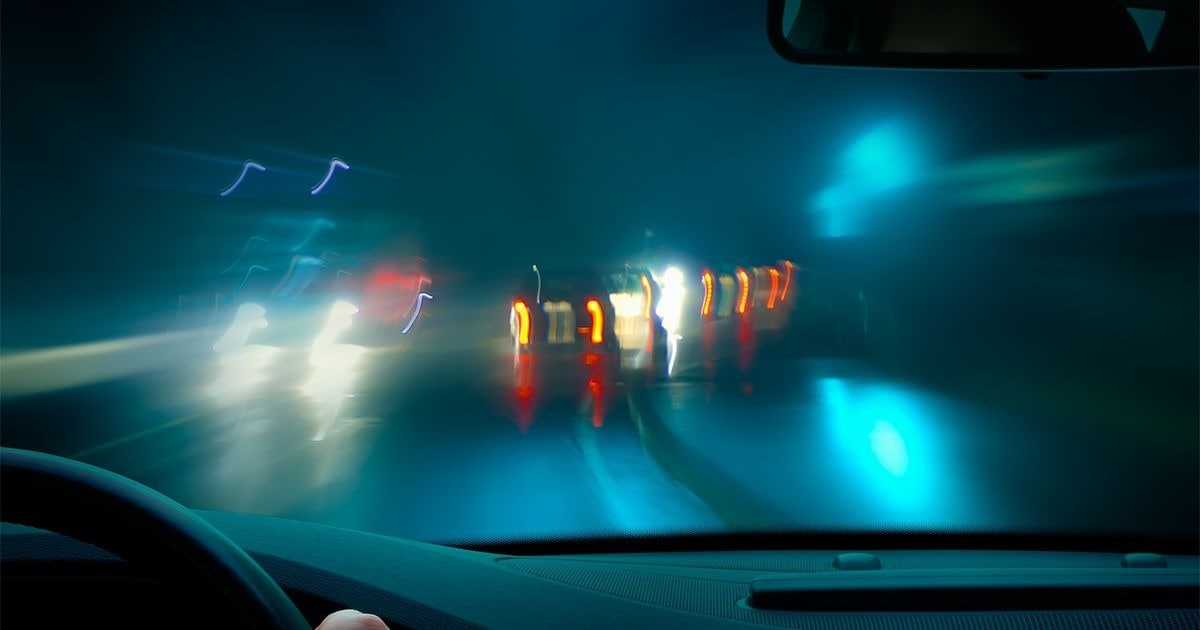
Dark, rainy conditions can decrease your contrast sensitivity to the point where driving is unsafe. On nights like this, you might want to just stay home. Click here for more information on contrast sensitivity.

Night driving can be particularly hazardous when older drivers have vision problems.
 

  • Pupils shrink and don't dilate as much in the dark as we age, preventing older people from focusing as easily as younger people. Various reports indicate that the retina of an 80-year-old receives far less light than the retina of a 20-year-old. This can make older drivers function as though they are wearing dark sunglasses at night.
     
  • The aging cornea and lens in the eye become less clear as we age, causing glare and light scattering, according to a 1987 report on aging workers and visual impairment sponsored by the National Research Council. These changes also reduce contrast sensitivity — the ability to discern subtle differences in brightness — making it harder to see objects on the roadway at night.
     
  • An older person's eyes may test well in the doctor's office but still struggle to focus on the road at night, where processing complex, changing scenes is more difficult. According to the National Traffic Highway Safety Administration, advancing years decrease our ability to see stationary and moving objects, including cars or pedestrians that might cross the road in front of us. Our ability to resist glare and see reflective road signs and markings also decreases with age.
     
  • Many people's corneas have optical imperfections that can't be corrected with eyeglasses or contact lenses. These aberrations increase with age and reduce vision, especially when the pupil dilates at night, according to 1999 research published in Investigative Ophthalmology and Visual Science.
     
  • Age-related macular degeneration, glaucoma, diabetic retinopathy, or cataracts affect 33 percent of all people 40 and older — the same percentage who have nearsightedness, farsightedness, and other refractive errors, according to Vision Council of America (VCA). So even if you are lucky enough not to have a refractive error, you are still at significant risk of developing other common diseases affecting older eyes.

These problems, combined or in isolation, "may cause such a gradual decline in vision that a driver doesn't realize he has become visually impaired," says ophthalmologist Elaine G. Hathaway, MD, speaking on behalf of VCA.

Sight-Threatening Eye Diseases
Eye Disease Symptoms
Cataract -Cloudy or blurry vision
-Faded colors
-Glare
-Headlights, lamps, or sunlight that appear too bright
-Halos around lights
-Poor night vision
-Double vision or multiple images in one eye
-Frequent changes in your eyeglasses or contact lens prescription
Diabetic Retinopathy -Severe vision loss, even with no initial symptoms
-Blurred vision
-Specks of retinal blood, or spots, affecting your vision; spots may clear without treatment, only to be followed by severely blurred vision, severe vision loss, and blindness
Glaucoma -No symptoms initially
-Gradual decrease of peripheral vision
-Eventual loss of peripheral vision and blindness
Dry Macular Degeneration -Blurred vision, which is a common early sign
-Inability to see details clearly at a short distance as disease progresses
-Small, growing blind spot in central vision
Wet Macular Degeneration -Straight lines that appear crooked
-Small blind spot, resulting in loss of central vision
Source: National Eye Institute, U.S. National Institutes of Health

Ironically, high beams, auxiliary lights, and fog lights designed to help you see better can put you at risk for an accident due to the glare you may experience when oncoming vehicles have these features.

Finally, some motorists who have undergone laser vision correction such as LASIK may experience increased glare from oncoming headlights due to corneal aberrations caused by their surgery.

Many Older Americans Ignore Need for Eye Exams

Despite these ample reasons for concern, most states have lax vision screening requirements for drivers renewing their licenses. According to a VCA report released in the fall of 2006, the 10 states with the highest rate of fatal crashes included four that required no vision screening for license renewal and four that require only screenings at intervals of eight or more years. VCA also reports that only 20 states require more frequent vision screenings for older drivers.

How Does Your State Rate?
Below are the key points of a 2006 state-by-state analysis of driver's license vision screening requirements conducted by Vision Council of America.
Vision Screening Requirements for License Renewal States
No vision screening required Alabama, Connecticut, Kentucky, Mississippi, New Jersey, Oklahoma, Tennessee, Vermont, West Virginia
Vision screening required for older drivers only Georgia, Maine, Oregon, Pennsylvania
Visual screening required for all renewal applicants Alaska, Arkansas, Delaware, District of Columbia, Massachusetts, Michigan, Minnesota, Nebraska, New Hampshire, New York, North Carolina, North Dakota, Ohio, South Dakota, Texas, Washington, Wisconsin, Wyoming
Vision screening required for renewal applicants; more frequent screenings required for older renewal applicants Arizona, California, Colorado, Florida, Hawaii, Idaho, Illinois, Indiana, Iowa, Kansas, Louisiana, Maryland, Missouri, Montana, Nevada, New Mexico, Rhode Island, South Carolina, Utah, Virginia
Source: "Keeping Our Eyes on the Road," Vision Council of America, 2006

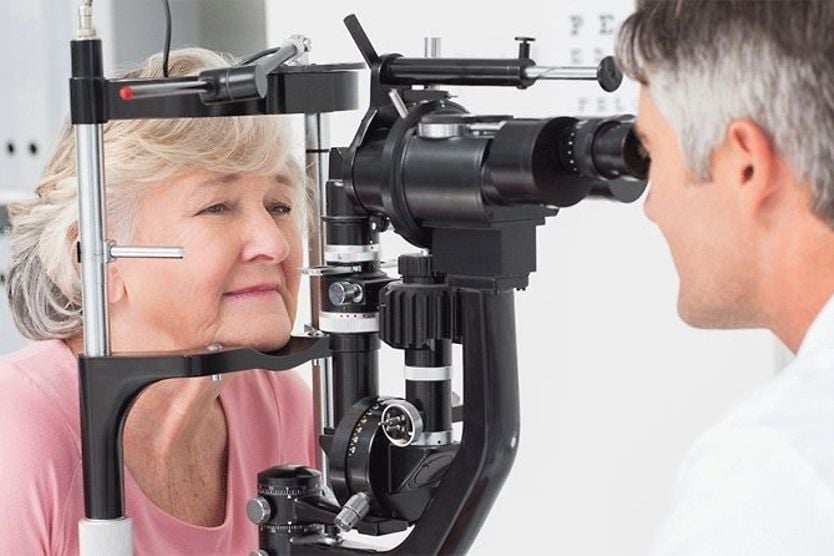
Taking responsibility for your eyes by having regular eye exams is one way to make up for this lack of government oversight. However, the CDC has found what it describes as "an alarming lack of concern" for preventive eye care among Americans age 50 and older. About 45 percent of adults in this category have never had a dilated eye examination, according to the CDC.

[Page updated June 2007]

Learn about your vision after 40 and Acuvue Bifocal Contact Lenses

Tears Again advanced Liposome Eyelid Spray is ideal for patients who have trouble using eye drops

For dryness and irritation caused by eyelid problems, learn about OCuSOFT Lid Scrub

Bothered by blurry vision? New Blur Relief eye drops naturally refresh dry, irritated eyes

Reproduction of any images or text from this website is prohibited by copyright law. Please read our copyright infringement policy.

Link Colors: Green = glossary terms, Blue = other pages
 
All About Vision is a registered service mark of Access Media Group LLC.
Copyright 2000-2008 Access Media Group LLC.

This website is accredited by Health On the Net Foundation. Click to verify.

We comply with the
HONcode standard for
trustworthy health
information:
verify here.