Each year, thousands of eye injuries could possibly be prevented if more people would wear safety glasses or protective eyewear.
Look for comfort features such as a hypoallergenic frame material and shock-absorption padding. They come in various colors, and some styles work with prescription lenses and helmets.
Eye injuries happen all too frequently when adults and kids are enjoying sports or working around the home. Children can be especially vulnerable to eye injuries because they often don't consider that their eyes, and possibly a lifetime of healthy vision, are at stake.
Approximately 430,000 sports-related eye injuries each year in the United States are severe enough to require emergency room care.
And experts agree that 90 percent of these injuries could be prevented by wearing protective eyewear. For children, eye injuries happen mainly during sports and other active play. Kids should wear eye protection for the following sports and recreational activities:
Paintball games also can be dangerous and are a growing cause of eye injuries among children and young adults. [Read more about paintball eye injuries.]
Lead By Example: Wear Safety Glasses And Sports Eyewear
Perhaps the ideal way to encourage your kids to wear protective eyewear is to lead by example and wear it yourself.
For instance, modern wraparound safety glasses for yourself and your children are appropriate options, and putting on this eyewear whenever you play sports or work with tools or power equipment. Insist that your kids follow your example.
Let Your Children Choose Their Protective Eyewear
When shopping for safety glasses and protective eyewear, let your child choose the style he or she prefers (as long as it provides the eye protection they need).

Swim goggles with polycarbonate lenses can protect your child's eyes from pool chemicals, water-borne microorganisms and the sun's UV rays. You can even get them with prescription lenses.
Seek the advice of a professional optician to make sure the eyewear fits well and provides the amount of protection needed for the sports and activities your child participates in.
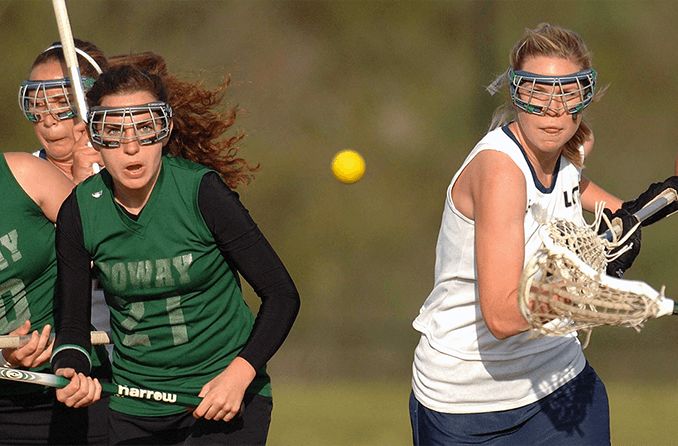
Protective eyewear for sports like baseball, hockey and lacrosse should include a polycarbonate face mask or wire shield.
Eyewear for other sports — including basketball, soccer, hockey and tennis — should feature wraparound polycarbonate lenses or side shields. [Read about fitting sports eyewear to your child's face.]
Protective eyewear can be purchased with prescription lenses from an eye care practitioner so children requiring a correction for nearsightedness, farsightedness or astigmatism can see clearly during their favorite sports without risk of eye injuries.
Other Considerations When Purchasing Protective Eyewear For Kids
Lens materials matter when choosing protective eyewear. Specialized polyurethane-based lenses and polycarbonate lenses are considerably more shatter-resistant than standard plastic lenses, making them a preferred choice for safety and sports eyewear. In addition to providing eye protection, these lenses also are typically lighter than plastic lenses.
Protective eyewear also is important for skiing and other outdoor sports. Ultraviolet (UV) rays and excessive sunlight bouncing off snow and ice can lead to a painful sunburn of the eyes called photokeratitis. Long-term exposure to UV rays has been associated with cataracts and age-related macular degeneration (AMD) later in life.
To protect your child's eyes from both the short-term and long-term dangers of the sun's harmful UV rays, make sure their sport sunglasses and ski goggles provide 100 percent UV protection. [Read more about UV rays and your eyes.]
Consider polycarbonate photochromic lenses. These light-sensitive lenses are relatively clear indoors with a subtle tint, darken automatically in sunlight, and provide 100 percent UV protection at all times.
Photochromic lenses also considered convenient because they reduce the need for a separate pair of prescription sunglasses. Ask your optician to show you a sample.
SEE RELATED: Features to consider when purchasing sports glasses for kids