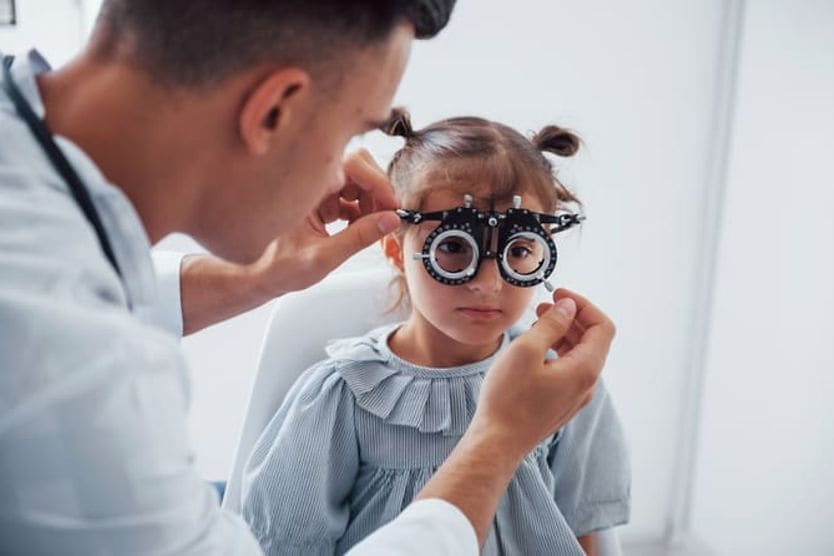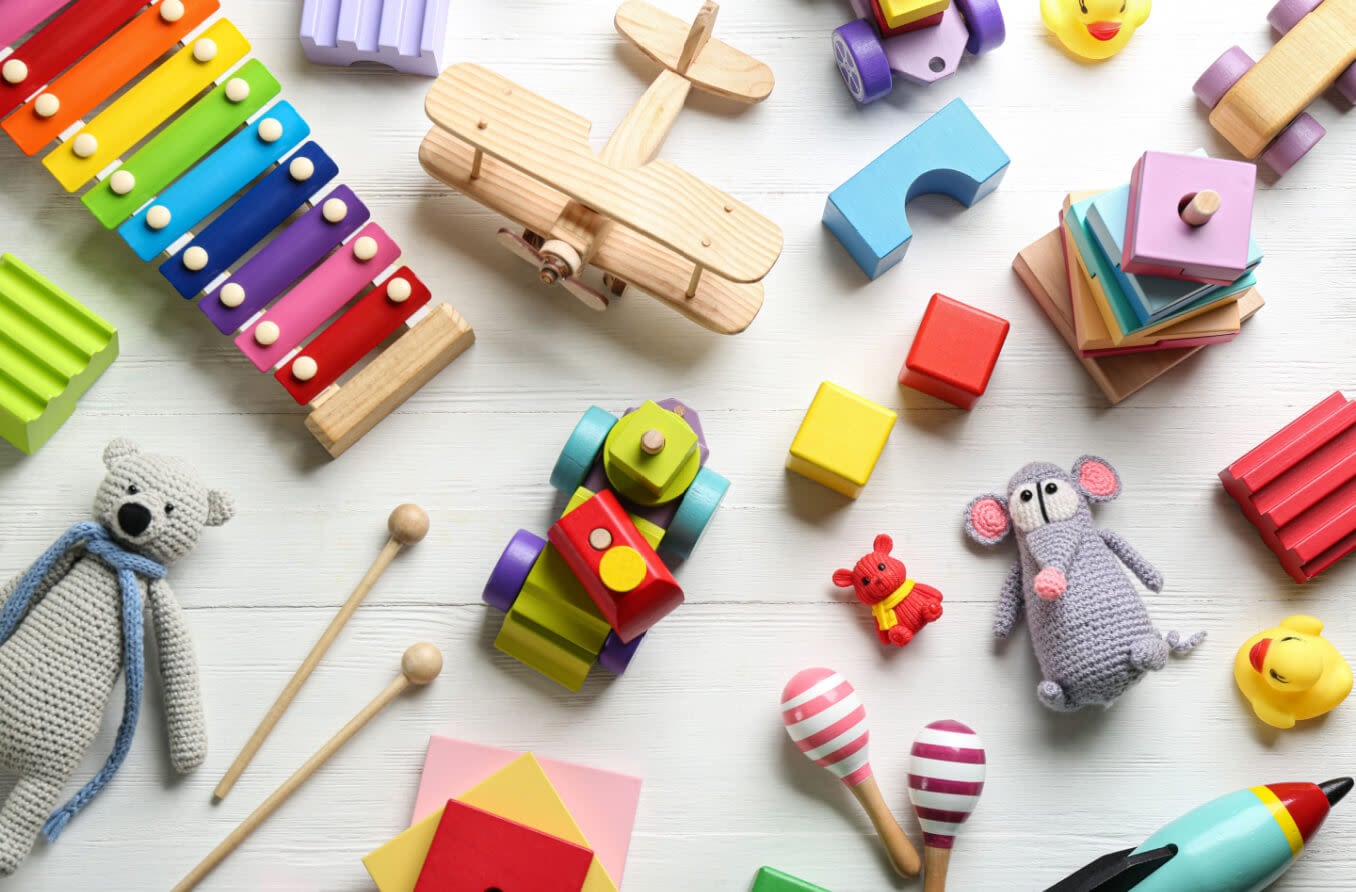
Choosing toys with eye safety in mind is an important consideration for parents and caregivers.
Babies’ vision continues developing after birth. Age-appropriate toys can help support visual development. Toys also can be a simple way to encourage babies and young children to use their developing vision.
Children spend a lot of time playing at home, where toy-related injuries can happen. Choosing toys that are safe for a child’s age and developmental stage can help reduce the risk of injury, including eye injuries.
A toy may be labeled for a certain age group, but it still may not be appropriate for every child. Consider how your child plays, whether they still put objects in their mouth and whether the toy has small parts, sharp edges or pieces that could break off.
How to size up toys
Together with age appropriateness is making sure the toy is developmentally appropriate. Toys labeled for children ages 3 and up may include smaller pieces. If your 4-year-old still likes to put things in her mouth, these toys may not be developmentally appropriate.
Toy size also is important. If a toy is large enough not to fit into a child's mouth but can be manipulated into a smaller size, you may want to put the toy away until your child is older.
Children's toys should be sturdily constructed so they won't break or fall apart with reasonable play. Double-check that any paints or finishes are non-toxic and not likely to peel or flake off.
Stuffed, plush toys should be machine washable, and, for younger children, made without tiny pieces to pull off, such as buttons or ribbons.
Avoid toys with sharp or rough edges or pieces. Long-handled toys — such as a pony stick, broom or vacuum — are safer with rounded handles. Supervising toddlers during play also can improve safety.
More on what toys to avoid
Avoid toys that shoot objects in the air — such as slingshots, dart guns or arrows — for children under 6, and closely supervise any child playing with such toys. If an older child uses a chemistry set or woodworking tools, safety goggles can help protect their eyes.
Age and developmental recommendation advisories are displayed on the packaging of toys for a reason. Some may consider a toy is "neat" or "looks fun to play with," but it may not be appropriate for infants or young children for safety reasons.
Parents can also monitor toys that are best avoided with children’s vision in mind.
Toy suggestions
Following are some suggestions for age-appropriate toys for children to stimulate their visual development, develop hand-eye coordination and understand spatial relationships.
Birth to 12 months. Brightly colored mobiles (make sure the colors and detail on the mobile pieces face down to the child, not up to the parent), rattles, balls, stuffed animals, activity gyms, blocks, stacking/nesting toys, pouring toys (such as measuring cups).
1-year-olds. Finger paints, modeling clay, board books, balls, stuffed animals, blocks, stacking/nesting toys, pouring toys (such as measuring cups), riding toys, puzzles (with large pieces), shape sorters, musical toys.
2-year-olds. Finger paints, modeling clay, large interlocking blocks, board books as well as standard books, balls, stuffed animals, stacking/nesting toys, pouring toys (such as measuring cups), riding toys, puzzles (with large pieces), shape sorters, musical toys, dress-up clothes, child-sized household toys and items (broom, vacuum, rake, lawn mower), toy computer, child-sized kitchen area (refrigerator, stove, microwave, sink, cupboard, table and chairs), sandbox, kiddie pool, child-friendly music player, magnetic letters, climbing toys (such as backyard gyms or playscapes).
3- to 6-year-olds. Large crayons, large markers, finger paints, modeling clay, interlocking blocks, books, balls, stuffed animals, tricycle or bicycle, puzzles, musical toys, swings, dress-up clothes, child-sized household toys and items (broom, vacuum, rake, lawn mower), kids' learning or game tablet, child-sized kitchen area (refrigerator, stove, microwave, sink, cupboard, table and chairs), sandbox, kiddie pool, child-friendly music player, stringing beads, magnetic letters, climbing toys (such as backyard gyms or playscapes), toy camera, basketball set, board games, roller skates.
7- to 10-year-olds. Crayons, markers, finger paints, modeling clay, interlocking blocks, arts and crafts kits, sewing toys, books, balls, stuffed animals, bicycle, puzzles, musical toys or musical instruments, swings, dress-up clothes, music player, tablet, computer games, camera, board games, science items (such as microscope, telescope and chemistry sets), roller skates, skateboard, jump rope, sports equipment.