Prosthetic Contact Lenses
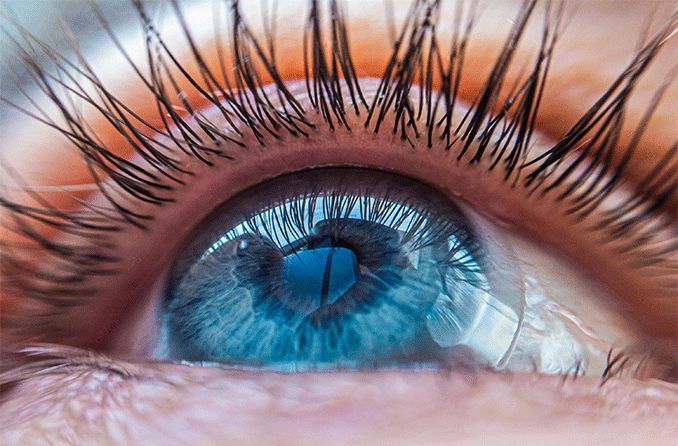
Prosthetic contact lenses are prescribed to mask flaws and improve the appearance of an eye disfigured from a birth defect, trauma, or eye disease.
If certain structures of the injured or disfigured eye also fail to function properly, special prosthetic lenses can be designed to block excess light from reaching the back of the eye to reduce glare and increase comfort.
Your eye care practitioner can match prosthetic contact lenses to the appearance of a healthy eye by using a pre-made trial set or by ordering custom-painted contact lenses.
Like regular contact lenses, prosthetic contacts can be made of gas permeable or soft lens materials. And most prosthetic lenses can be cleaned and disinfected using the same multipurpose contact lens solutions recommended for conventional soft or gas permeable lenses.
Custom prosthetic lenses can be made in a wide variety of lens powers to correct nearsightedness, farsightedness and/or astigmatism, or they can be produced without corrective power to simply provide a more natural appearance to a blind or disfigured eye.
Eye Conditions That May Benefit From Prosthetic Contact Lenses
Many injuries, conditions and infections can lead to disfigurement of an eye and make an individual feel self-conscious about his or her appearance. Prosthetic lenses can be specially designed to match the appearance of the unaffected eye as closely as possible and make the disfigured eye less conspicuous.
Disfiguring conditions frequently treated with prosthetic contact lenses include incomplete formation of the pupil (aniridia), lack of pigment or color in the eye (albinism) and damage to the cornea from trauma.
People with albinism or other eye conditions creating light sensitivity (photophobia) can benefit from prosthetic lenses that reduce the amount of light entering the eye. Prosthetic lenses also are sometimes used to eliminate double vision (diplopia) caused by certain eye conditions.
Special prosthetic colored contact lenses sometimes are used to improve vision in cases of childhood amblyopia. Two identical-appearing colored contacts are worn, but one lens has an opaque pupil painted on it to block (occlude) light from entering the eye. This lens is worn on the eye with normal sight, forcing greater use of the amblyopic eye to improve vision development in the affected eye.
Occlusion therapy with prosthetic contact lenses can be more effective for treating amblyopia than the use of an eye patch, which children often resist or remove due to embarrassment. But amblyopia treatment with contacts is more expensive due to the cost of the prosthetic lenses.
How Prosthetic Contact Lenses Are Prescribed
The first step in being fit with prosthetic contact lenses is to have a comprehensive eye exam. During this exam, your optometrist or ophthalmologist will thoroughly examine your eyes to rule out conditions that might interfere with successful prosthetic contact lens wear.
The second step is to undergo a contact lens fitting. In addition to performing the steps in a normal contact lens exam and fitting, your eye doctor may also take close-up photographs of your eyes. These color photos are sent to the prosthetic contact lens manufacturer to help the company create a prosthetic lens that matches your natural eye color and appearance as closely as possible.
Some eye doctors who specialize in contacts for hard-to-fit eyes also may have fitting sets of sample prosthetic lenses on hand so you can get an immediate idea of how effectively the lenses can restore a natural appearance to your affected eye(s).
READ NEXT: Halloween contacts
Page published on Wednesday, February 27, 2019