Colored Contacts: All About Color Contact Lenses
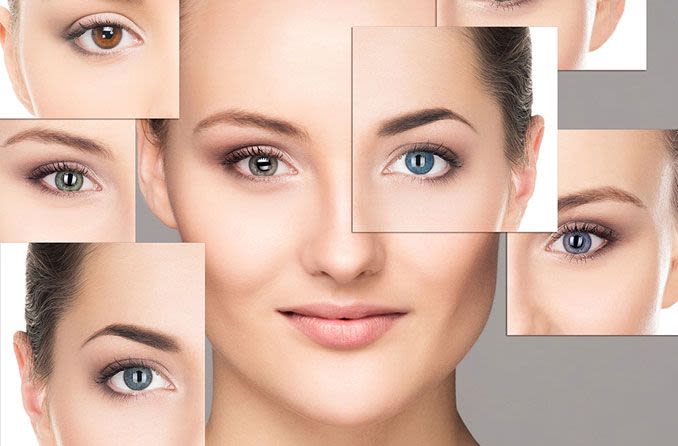
Colored contacts
Colored contacts allow you to change your eye color in ways that are subtle, bold or anywhere in between. A prescription is required for colored contact lenses whether or not you need vision correction. This is because all contact lenses are considered medical devices and have the potential to harm your eyes if they are not properly fitted, worn and maintained.
This is a little confusing, because people often use the terms prescription colored contacts and non-prescription colored contact lenses.
When these terms are used, this is what's being described:
Prescription colored contacts change your eye color and also correct myopia (nearsightedness), hyperopia (farsightedness) or astigmatism.
Non-prescription colored contacts change your eye color only. They have no lens power to correct vision problems. (These are also called plano colored contacts.)
But regardless which type of colored contacts you want or need, a professional fitting and a contact lens prescription from a licensed eye doctor is required.
Types of colored contacts
Most colored contact lenses are designed to mimic the natural look of the colored part of the eye, called the iris.
Since this area is made up of colorful shapes and lines, some color contacts feature a series of tiny colored dots and radially arranged colored lines and shapes to help the lenses look more natural on the eye.
The center of the lens, the part that lies over your pupil, is clear so you can see.
Color contacts come in several kinds of tints:
Visibility tint
This usually is a light blue or green tint added to a lens, just to help you see it better during insertion and removal, or if you drop it.
Visibility tints are relatively faint and do not affect your eye color.
Enhancement tint
This is a solid but translucent (see-through) tint that is a little darker than a visibility tint. As the name implies, an enhancement tint is meant to enhance the natural color of your eyes.
Colored contacts with this type of tint usually are best for people who have light-colored eyes and want to make their eye color more vibrant.
Blending tints
These color-blending contacts are designed with tints that become gradually more opaque from the outside edges in, which allows a more natural-looking new eye color.
Opaque tint
This is a non-transparent tint that can change your eye color completely. If you have dark eyes, you'll need this type of color contact lens to change your eye color.
Color contacts with opaque tints come in a wide variety of colors, including hazel, green, blue, violet, amethyst, brown and gray.
Costume or theatrical contact lenses also fall into the category of opaque color tints. Long used in the movies, these special-effect contact lenses are now widely available for novelty use. You can temporarily transform yourself into an alien, goth or vampire, to name a few.
Choosing the best colored contacts
The contact lens color that will suit you best depends on many factors, such as your hair color and skin tone. But, ultimately, it depends on the kind of look you want to achieve — subtle and natural-looking or dramatic and daring. Whether you want full color or color-enhancing contacts, there are plenty of great options to choose from.
Color contacts for light eyes
If you want to change your appearance but in a more subtle way, you may want to choose an enhancement tint that defines the edges of your iris and deepens your natural color.
And if you want to experiment with a different eye color while still looking natural, you might choose contact lenses in gray or green, for example, if your natural eye color is blue.
If you're after a dramatic new look that everyone notices immediately, those with naturally light-colored eyes and a cool complexion with blue-red undertones might choose a warm-toned contact lens such as light brown.
Color contacts for dark eyes
Opaque colored tints are the best choice if you have dark eyes. For a natural-looking change, try a lighter honey brown or hazel colored lens.
But if you really want to stand out from the crowd, opt for contact lenses in vivid colors, such as blue, green or violet. And if your skin is dark, bright-colored lenses can create a show-stopping new look.
SEE RELATED: What color contacts are right for you?
Custom-tinted contact lenses
If you're after a truly individualized look, some contact lens manufacturers specialize in creating custom color tints for both prescription and non-prescription contact lenses.
Custom-made tints are created from a variety of colors in varying densities. The colors typically are semi-translucent, creating a natural-looking appearance. They can even camouflage a congenital eye defect or eye injury, or mimic the appearance of a healthy pupil.
Custom-tinted color contacts aren't just for cosmetic use. Custom tints are increasingly popular among professional athletes to increase their visual performance.
Key benefits of "sport tint" contact lenses are reduced glare, enhanced contrast sensitivity and heightened depth perception. A green tint, for example, can enable a tennis player to see the ball more clearly on the court.
There now are also contact lenses that have a photochromic tint that adjusts automatically to different lighting conditions.
Photochromic contact lenses, however, are designed to reduce the brightness of sunlight entering your eyes in bright conditions — they are not designed to change your eye color.
Color contact lenses do's and don'ts
Whether you are wearing color contact lenses for a new look, a Halloween costume or a role in a theatrical production, these do's and don'ts will help keep your eyes free of infections.
DON'T share your contact lenses
As fun as it may sound, never swap colors with your friends. Contact lenses are medical devices and are fitted to the specifications of each person's eyes.
Exchanging lenses also can transmit harmful bacteria, which can lead to a serious, vision-threatening eye infection.
DO care for your contact lenses properly
Colored contacts, like clear contact lenses, must be properly cleaned, disinfected and stored with appropriate lens care products to avoid contamination.
And don't forget to replace your lenses according to your eye care professional's instructions.
DON'T wear your color contacts if your eyes are irritated
Sore, irritated or red eyes may be a symptom of a contact lens-related eye infection or other serious problem.
DO have fun with your new look
Whether you want to enhance your facial features or create a dramatic statement, colored contacts allow you to have the eye color you've always wanted.
Colored contacts: Potential drawbacks
Before you choose colored contacts, be aware of these limitations:
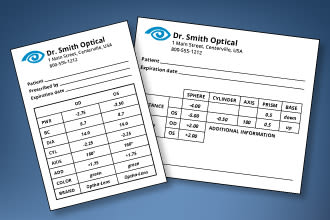
Try these interactive Rx forms to learn what the measurements mean on your eyeglass prescription or contact lens prescription.
Although there are different-sized color contacts to fit most wearers, there will be some occasions (such as during blinking) when the colored portion of the lenses might slide somewhat over the pupil. This creates a less-than-natural appearance, particularly when wearing opaque color contacts.
Also, the size of your pupil of your eyes is constantly changing to accommodate varying light conditions — so sometimes, like at night, your pupils may be larger than the clear center of your color lenses. In some cases, this might affect your vision.
Are color contact lenses safe?
Yes, colored contact lenses are safe — as long as your contacts are properly fitted, worn and cared for.
It's essential that you see an eye doctor for a proper contact lens exam and fitting. This will ensure your color contacts are safe and comfortable and look natural on your eye.
Just like regular contact lenses, color contacts are not bad for your eyes if you follow your eye doctor's instructions, particularly regarding how long you should wear your contacts and when you should replace your contacts.
If you want to change your eye color only for special occasions, daily disposable color contacts are a great option. Though a type of surgery to change eye color is available, colored contacts are a much safer (and reversible) way to change the color of your eyes.
Do you need a prescription for color contact lenses?
Yes, you need a contact lens prescription to purchase colored contacts legally in the United States.
This is true even for plano ("non-prescription") colored contacts that have no power for vision correction and are used for cosmetic purposes only.
In the United States, all contact lenses are classified as medical devices by the Food and Drug Administration (FDA). All contact lenses, worn for any purpose, require a valid contact lens prescription written by a qualified eye care professional and cannot be legally sold to consumers without one.
If you see color contact lenses being sold in a flea market, it's likely that the vendors are breaking the law. Other illegal sales of cosmetic contact lenses have been discovered in gas stations, beauty salons and novelty shops.
Always ensure you're buying contact lenses from a legitimate source. The health and safety of your eyes is not something to play around with!
READ RELATED: Where can I buy contacts without a prescription?
Cost of colored contact lenses
Colored contacts cost more than regular (clear) contact lenses. The exception to this is colored contact lenses that have only a faint visibility tint for locating the lenses when you take them off. These lenses typically are the same price as clear lenses.
The increase in cost for color lenses may be relatively minor (for mass-produced colored contacts) or it can be several times the cost of regular contact lenses (for colored contacts with custom tints). But for many people, the ability to change their eye color is worth the added expense.
READ MORE about the cost of contact lenses.
Page published on Wednesday, February 27, 2019