Will wearing glasses make your eyes or vision worse? The short answer is no.
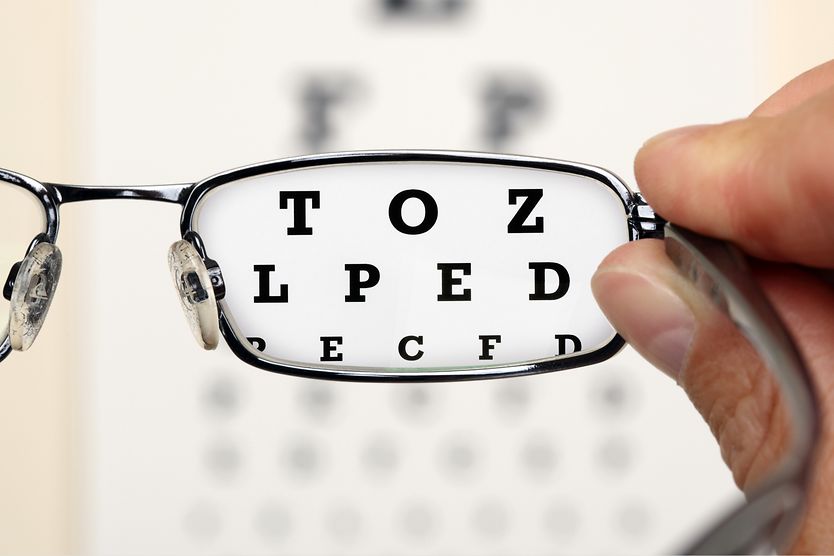
Here’s why: Glasses fitted with your prescription help correct your vision when you wear them. For example, if you have trouble reading menus, progressive lenses or reading glasses can bring those entrée options into focus.
Here are the answers to some frequently asked questions about how glasses affect your eyes and vision:
Does wearing glasses weaken your eyes?
As we age, our vision changes, and it may seem as if you are getting a new eyeglasses prescription every year or so. You may even wonder if your glasses are weakening your eyes instead of improving your vision.
Your glasses are not weakening your eyes or vision. Beginning around age 40, people tend to have trouble seeing up close. Your eye doctor may tell you that you have presbyopia.
Your glasses are not the cause of your changing vision, they are correcting for refractive errors or age-related presbyopia. For example, progressive lenses (or multifocal contacts) can help you to see clearly again up close.
How does vision change as you age?
To understand why vision can worsen as you age, it’s important to consider how the lenses in our eyes work.
Each eye lens is about the size of a shirt button, and each lens flexes and changes shape as we focus on objects either close by or far away. The amount of flexing corresponds with the distance of an object (e.g., lenses flex more to bring closer objects into focus).
As we age, our eye lenses grow larger and thicker while the so-called focusing muscles (ligaments called zonules) slacken. As the lens hardens and becomes less flexible, these ligaments can no longer adequately bend the lens into the position necessary to see up close.
This age-related weakening of the lenses of your eyes has nothing to do with whether or not you are regularly wearing glasses. Glasses, though, can correct for the gradual loss of your vision as the years roll by.
Can wearing glasses improve eyesight?
Glasses generally can’t fix medical issues or reshape your eyes, but spectacles can improve your vision when you’re wearing them.
Corrective lenses compensate for physical anomalies that reduce your eyes' ability to process light properly. These conditions are called refractive errors.
For example, someone who is nearsighted, also known as myopia, might experience fuzzy vision at distances because their eyes’ physical length is too long, causing distortion.
How glasses help: Corrective lenses won't shorten the length of the eye, but eyeglasses will counteract the way the eye processes light at a distance.
SEE RELATED: Can staring at the distance cure nearsightedness (myopia)?
Do glasses that don’t fit well damage your eyes?
Glasses that don’t fit well can cause headaches, eye strain, blurred vision, watery eyes and even dizziness. This may lead you to believe that your ill-fitting glasses might actually be harming your eyes.
Your glasses may be causing discomfort, but they are not making your vision worse. The lenses aren’t the problem. The source of your discomfort is your frames, and visiting an optician can usually solve the problem by adjusting your glasses.
Can wearing glasses that are the wrong prescription hurt your eyes?
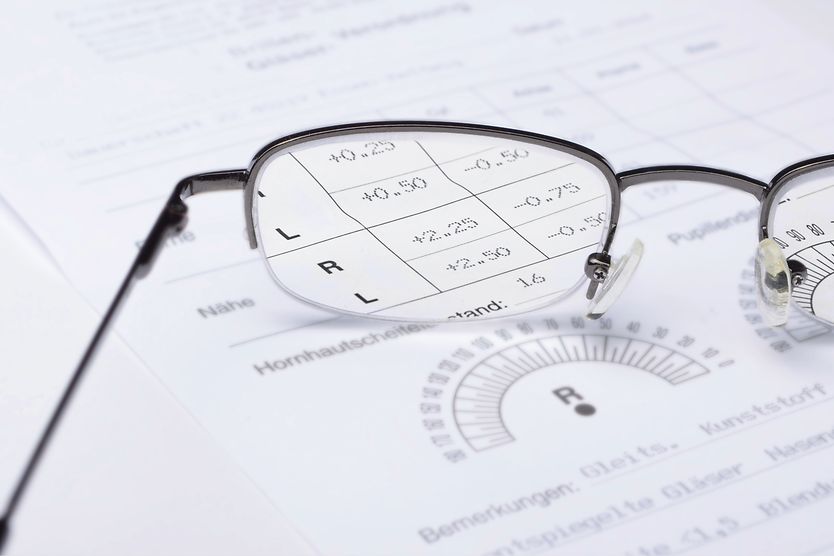
It’s been a year or so since you had an eye exam, so your glasses prescription may be out of date. Your vision possibly has changed. Glasses that no longer correct your vision could be causing eye strain.
Your glasses aren’t hurting your eyes, but those old lenses may not be providing enough vision correction anymore.
The possible solution? A comprehensive eye exam, a new prescription and new glasses.
NEED A NEW GLASSES PRESCRIPTION? Find an eye doctor near you and book an eye exam.
Will reading glasses weaken your eyes?
If you picked up your reading glasses at the dollar store, drugstore or super center, you may wonder if your trusty, handy readers are weakening your eyes.
Your readers — like all eyeglasses — are not harming your vision or decreasing your eyesight. Glasses help correct for age-related presbyopia. One thing to note about presbyopia is that it usually progresses over a period of time. If your once-adequate readers aren’t as helpful anymore, it’s possible that you need to increase the lens strength.
If, however, you find that you are becoming more reliant on your readers, it may be time to consider progressive or bifocal lenses.
Is it good to wear glasses all the time?
Whether or not you should wear corrective lenses all the time depends on why you need eyeglasses. Follow your eye doctor’s recommendation.
If you only need glasses for certain activities, like reading or driving, wear your glasses only when you are engaged in those activities.
Otherwise, wear your glasses as often as you need them or for as long as they feel comfortable. If you’re still worried that your glasses might be harming your vision, talk to an eye doctor who can help put your mind at ease about wearing specs.