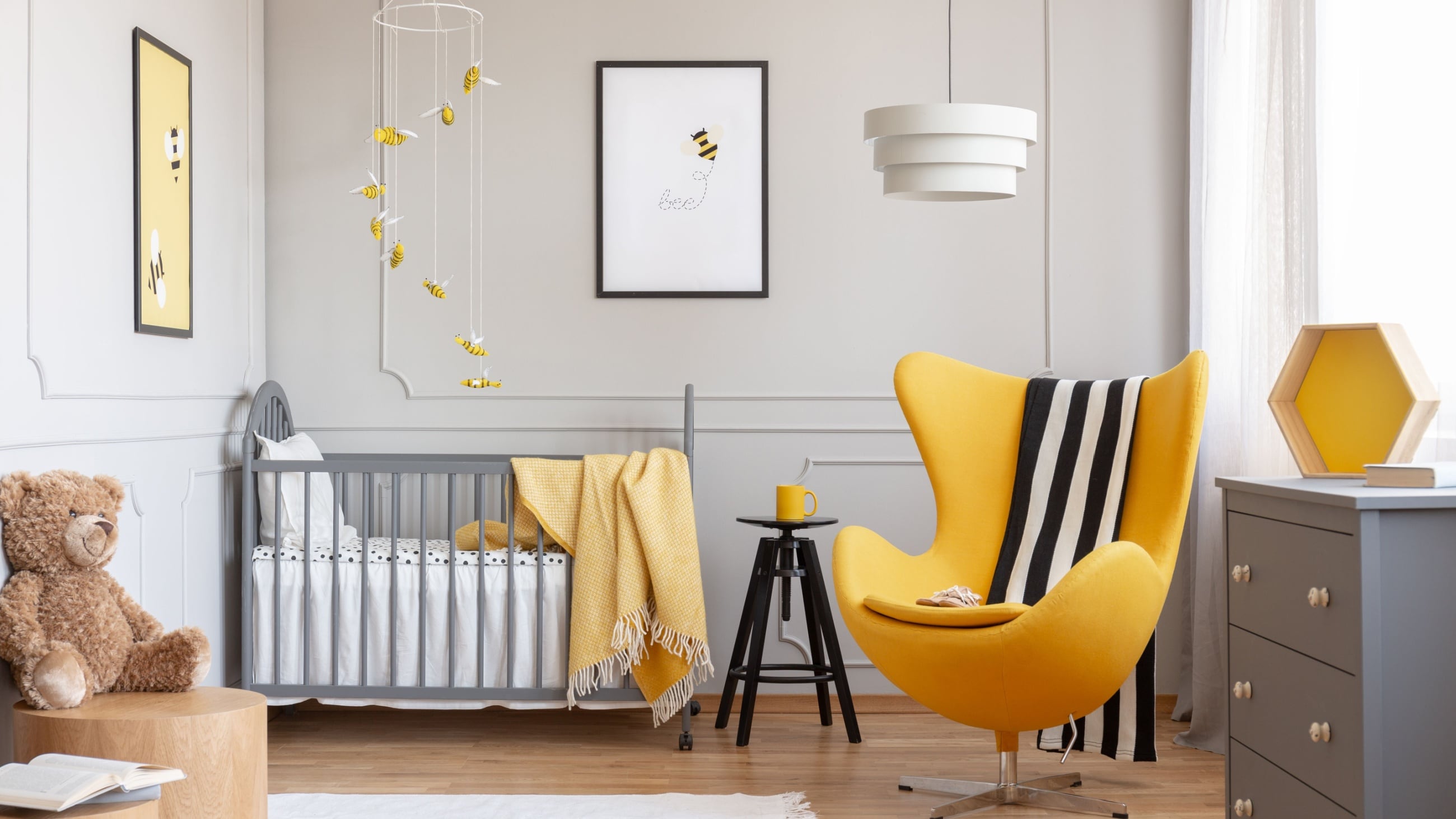
The ideal colors to use in a baby’s nursery may surprise you
A baby’s vision develops rapidly during the first year of life. Babies are introduced to dozens of new faces, objects and colors as they get used to the world around them — especially in their nursery. And studies show that contrasting colors are ideal for developing your infant’s vision.
The decision for the an appropriate nursery color or color scheme might be influenced by the sex of your baby. You may also find that neutrals seem ideal for a certain color palette. But it may surprise you to know that certain colors and patterns can help your baby’s eyes develop.
How a baby sees their nursery
Before choosing a color for the nursery, it’s important to understand how your baby will see it. And how they see it can affect their vision development.
Some fast facts about infant vision:
- Babies see things 8-12 inches away from their faces. This is where more visual stimulation appears in infancy.
- Newborn visual acuity (sharpness of vision) ranges from 20/200 to 20/400 at birth. (“Normal” vision is 20/20). An infant is capable of 20/20 vision at about 6 months of age.
- Bright lights are harsh on newborns’ sensitive eyes. Their eyes may be more likely to open up in dimmer environments — so, consider curtains for the windows in their room.
- At birth, a baby sees mostly in shades of grey. But after the first week, they can detect several colors. And by month one or two, they may even start to recognize the difference between certain colors.
- Research suggests that contrasting colors are easier on their growing retinas (the light sensitive tissue at the back of the eye).
- A baby’s vision is stimulated by contrasting colors, shapes, lights and moving objects — which are all things to consider when designing a nursery.
Now that you have this knowledge under your belt, what colors are appropriate for a baby’s nursery?
Color contrast is ideal for developing eyes
Research indicates that contrasting color schemes may be ideal for your baby’s eyes. As an infant's eyes begin to develop, their retinas can only see the difference between light and dark colors or contrasting color combinations. This is unlike a fully developed retina, which can sense all shades of color.
That said, the simple contrast between black and white may also be a good option for newborns. But regardless of color scheme, try to incorporate contrasting colors into your baby’s room — whether it’s in the wall paint, crib sheets, furniture or toys.
Some light and dark contrasting color combinations to try:
Designing a nursery in contrasting colors like dark gray and bright yellow can be helpful for your baby's developing eyes. Other options may include:
- Black and white
- Pale yellow and bright purple
- Dark green and red
- Navy blue and orange
- Maroon and seafoam green
- Teal and coral
- Bright yellow and hot pink
- Yellow and dark gray
By around two months of age, babies can start to notice differences between certain colors, including red and green or blue and yellow. However, these hues need to be vivid for infants to tell them apart, since their visual systems respond more effectively to stronger, more saturated shades during this stage of development.
So, when you are decorating, try to avoid pastels and pale or light colors alone when possible. Although these colors may feel soft and baby-friendly, they actually aren’t ideal for supporting their eyesight.
Tip: Look for contrasting wallpaper patterns or wall decals for decoration. Consider designating one wall as an accent wall or placing decals on various spaces around the room. This can provide both style and purpose to the space.
Nursery colors and brain development
Colors and patterns promote the healthy development of your baby’s eyes. They also encourage brain development. How? The brain gathers information from all five senses. And with this information, nerve cells multiply and connect with other nerve cells.
Properly nourishing your baby’s vision with objects and colors helps the retinas grow and supports the optic nerve, which is connected to the brain. This is crucial for the visual parts of the brain to thrive.
SEE RELATED: Do your eyes grow?
Other tips to stimulate your baby’s eyesight
Infant vision development is stimulated by more than just bright colors. Different kinds of toys can help your baby’s eyesight, hand-eye coordination and more. The majority of visual stimulation in infancy is created at distances close to a baby’s face. This can make toys with contrasting colors an option to consider.
Here are some additional ways to help stimulate your baby’s eyesight:
- Choose contrasting patterns such as stripes or polka dots in your child’s toys, blankets, framed art and other room decorations.
- Mobiles and other moving objects can give your baby something to focus on.
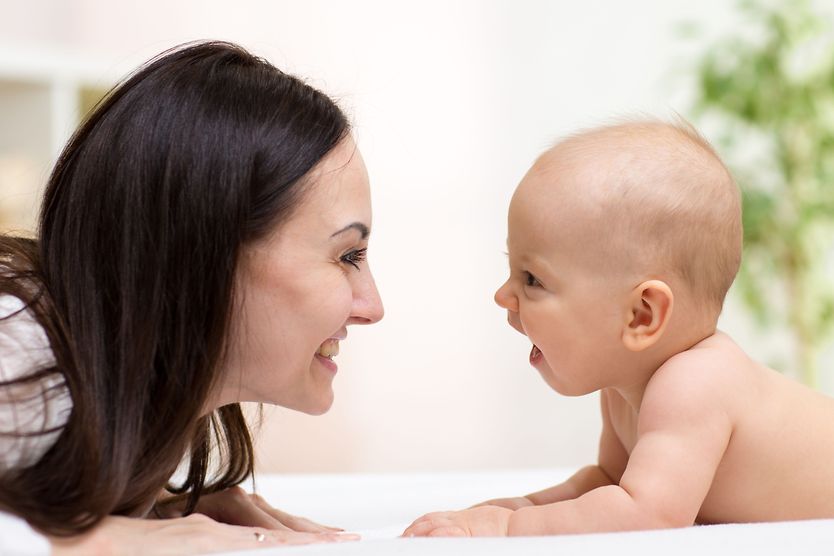
- Stay within 12 inches of your baby when interacting, whether it’s with a book, toy or if you’re talking to them. They can see you more clearly from a distance of about 8-12 inches. [Read more about how important eye contact is to a child’s development.]
- Play peek-a-boo with your baby. (The game may be more enjoyable for babies 4 months and older).
- Consider wearing contrasting patterns in your clothing to give your baby even more to look at.
- Blocks and crib gyms can help an older baby’s hand-eye coordination skills.
Babies may start to show you which colors they prefer between 5 and 7 months of age, though some might do so even earlier. Either way, you can take pride in incorporating even more colors into their surroundings as they get older.
Some eye doctors also recommend regularly changing the position of the crib. Moving the crib to a different location helps to stimulate a baby’s visual sense in a multitude of ways. And don’t forget to talk to your baby every chance you get, especially as you walk around their nursery.
Caring for your baby’s vision through the stimulation of colors, patterns, toys and more is crucial for healthy development. Supporting their visual development in other ways is important, too.
Schedule an eye exam for your baby
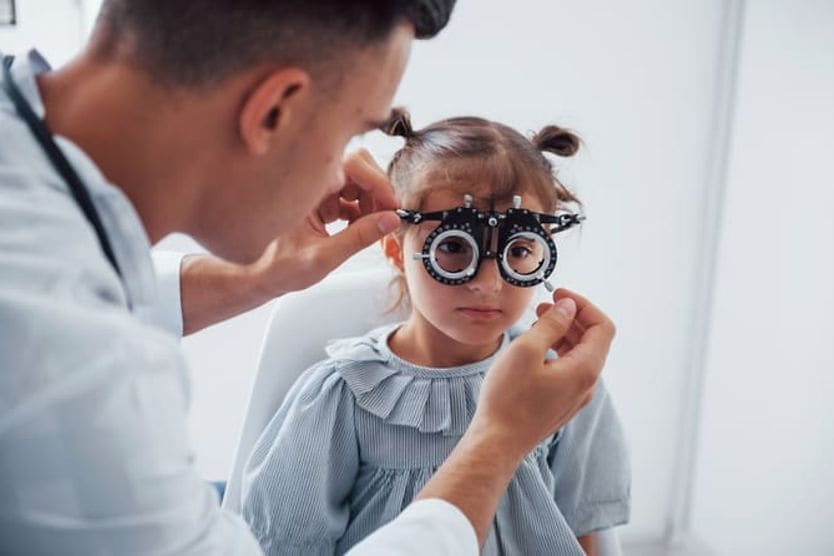
Babies should have their first eye exam within the first year of age to check for any vision conditions. Call your eye doctor if you notice that your baby’s eyes do not appear to work together, if they keep one eye closed or tilt their head to see, or if they have any abnormal crusting or tearing.
READ NEXT: How eye color develops and why it changes