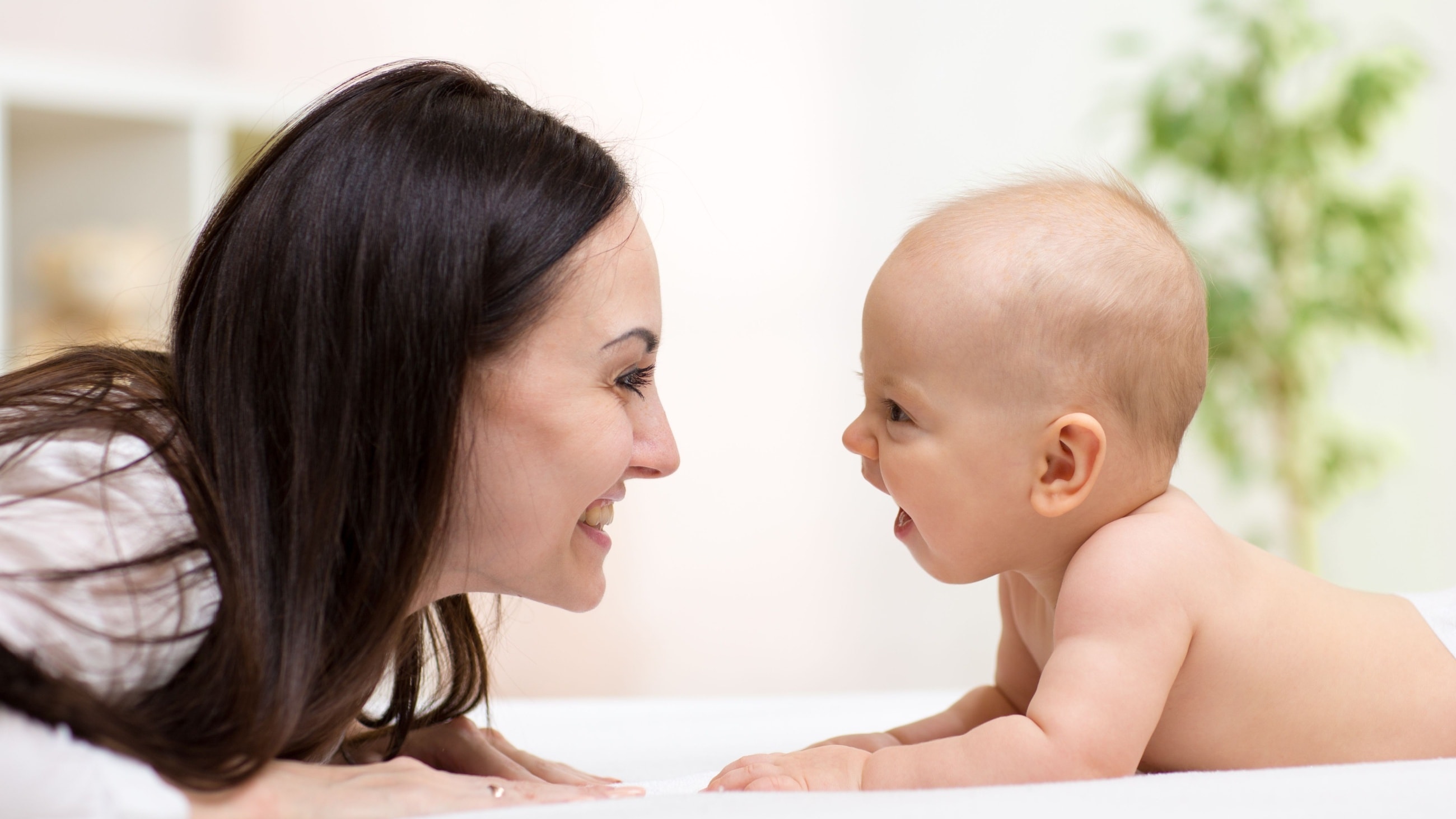
Eye contact is an important way for parents to communicate with their child. But what if your child has a social or physical disability that makes this difficult or impossible? Will a lack of eye contact negatively influence their development?
Children absorb the world around them and develop their ability to communicate using their visual sense. Children who are unable to make eye contact, due to developmental disorders or blindness, can learn to adapt to effectively build relationships.
How does eye contact affect a child’s development?
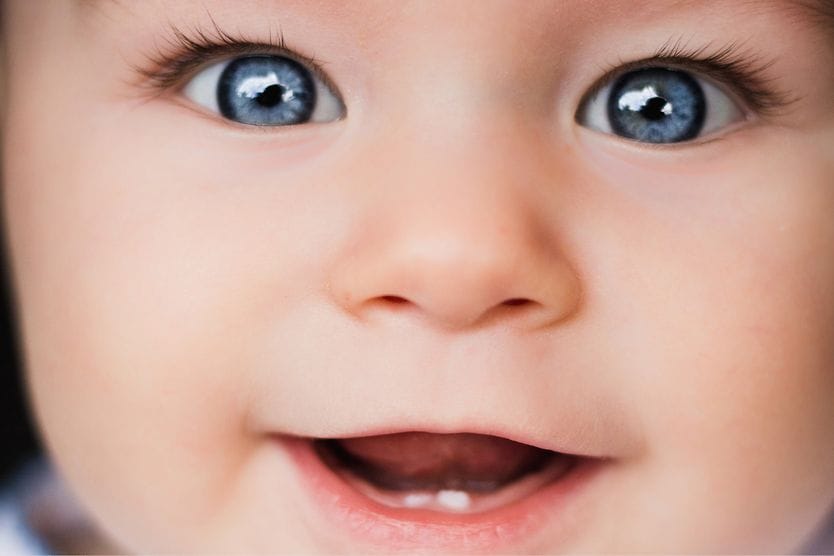
The majority of information we receive is initially processed through our vision. Although vision isn’t fully developed at birth, infants as young as 2 days old have been observed to show a preference for faces looking back at them.
Eye contact is also important for social–emotional and language development.
In fact, studies have shown that eye contact leads to greater language skills by age 2.
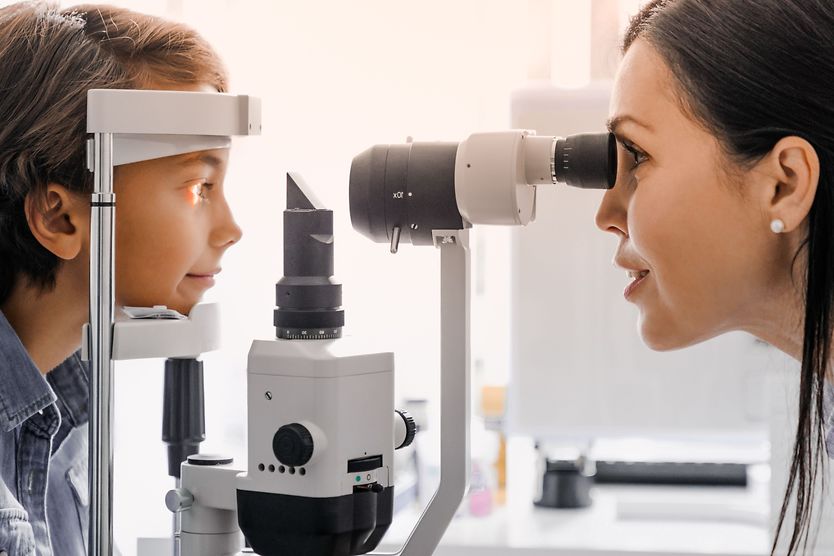
Beginning at birth, pediatricians will evaluate a baby’s vision and monitor it due to its close correlation to other areas of development. For example, visual development influences fine motor skills like picking up and manipulating objects. Eventually, this develops into other hand-eye coordination skills like writing. Certain eye problems can also be an early sign of a neurological or systemic issue.
IS YOUR BABY AVOIDING EYE CONTACT? Book an eye exam with a children's optometrist near you.
See related: Pediatric optometrist
Eye contact in children with autism
What is autism and how does it affect eye contact?
Many people think of autism as a primarily social disorder. However, many individuals with autism (although not all) also experience sensory processing disorders.
For some people, the sensory system is on high alert. They may feel, hear and/or see things at a higher stimulation level. For others, there may be sensory delays. Too much or too little sensory input can then lead to real overwhelm.
The many facial expression changes that occur throughout a conversation are often reflected through a person’s eyes. When making eye contact, you see all of the different ways a person can look, depending on their expressions.
For some people with sensory processing disorders, it may be too overwhelming. For example, someone who has delayed auditory processing may need to look away to be able focus on what someone is saying.
Is it possible for someone with autism to make eye contact with no trouble?
Yes. Autism is a spectrum disorder, so the presence and severity of symptoms vary greatly. And for many people, discomfort with eye contact can improve over time.
Should parents of an autistic child encourage eye contact at home?
Parents can certainly try to encourage eye contact at home, but forcing eye contact may do more harm than good.
Why? Eye contact can be very stressful for those with autism. It may feel violating or threatening. Or it may simply distract them from being able to listen to the person they’re making eye contact with.
Parents don’t need to avoid attempting to teach eye contact. However, when a child is given more agency to communicate in a way they feel comfortable, they’re more likely to engage and participate.
It’s important to always give the child the benefit of the doubt. If trying to encourage eye contact isn’t working or beneficial to the child, there are plenty of other methods you can teach them to show they’re paying attention.
These methods include:
- Encouraging the child to stay a conversational distance from whomever is speaking to them and avoid wandering off in the middle of conversation.
- Teaching the child to look toward the face without looking directly into the eyes (e.g., focus on the forehead or nose).
- Teaching the child various other responses they can use to show that they’re paying attention (a gentle pat, an “uh-huh” or “yes”).
SEE RELATED: Your infant's vision development: What to know
Eye contact with blind or visually impaired children
How does the social development of a blind child compare to that of a seeing child?
Early onset blindness has a greater overall effect on the development of social cues than if it occurs later in life.
Eye contact is important for the “social brain,” including the amygdala, where emotions are processed. Because of this, it's difficult for visually impaired children to recognize non-verbal and social cues, which makes it harder for them to interact socially.
However, there are several things parents can do to help a blind child develop their social skills, such as:
Explaining different types of social cues to your child
Practicing verbal and non-verbal interactions at home
Exposing your child to different types of social situations
What about children who have one or more blind parents? How is their nonverbal behavior different from a child of seeing parents?
Children who are born to blind parents experience a level of adaptation that research shows is almost immediate.
In one study, researchers monitored the first year of life for five sighted infants born to blind mothers. During the second half of their first year, the infants responded normally when interacting with sighted adults, but modified their behavior to accommodate their blind parents when interacting with them.
The need to switch between visual and auditory communication channels leads to aspects of development that are consistent with infants who grow up bilingually and must switch between spoken languages.
SEE RELATED: Baby's first eye exam
Other factors affecting children’s eye contact
Within the past several years, there’s been an increase in the number of children being given phones and tablets at an earlier age. Many parents may worry that this exposure could cause a delay in children’s social engagement and eye contact because they’re constantly looking away to stare at a tablet or phone.
To combat any potential social effects of excessive screen time, some pediatricians suggest the following guidelines could be beneficial:
- Avoid screen time in children under 18 months of age, unless it’s video chatting.
- Choose high-quality programming for children 18-24 months and watch it with them to help them understand what they’re seeing.
- Children 2-5 years old should be limited to one hour of quality programming per day.
- Allow children equal exposure to social engagements without a screen in front of them.
HAS YOUR CHILD HAD AN EYE EXAM YET? Schedule an appointment with a pediatric eye doctor near you.