Corneal inserts or implants: A proven treatment for keratoconus
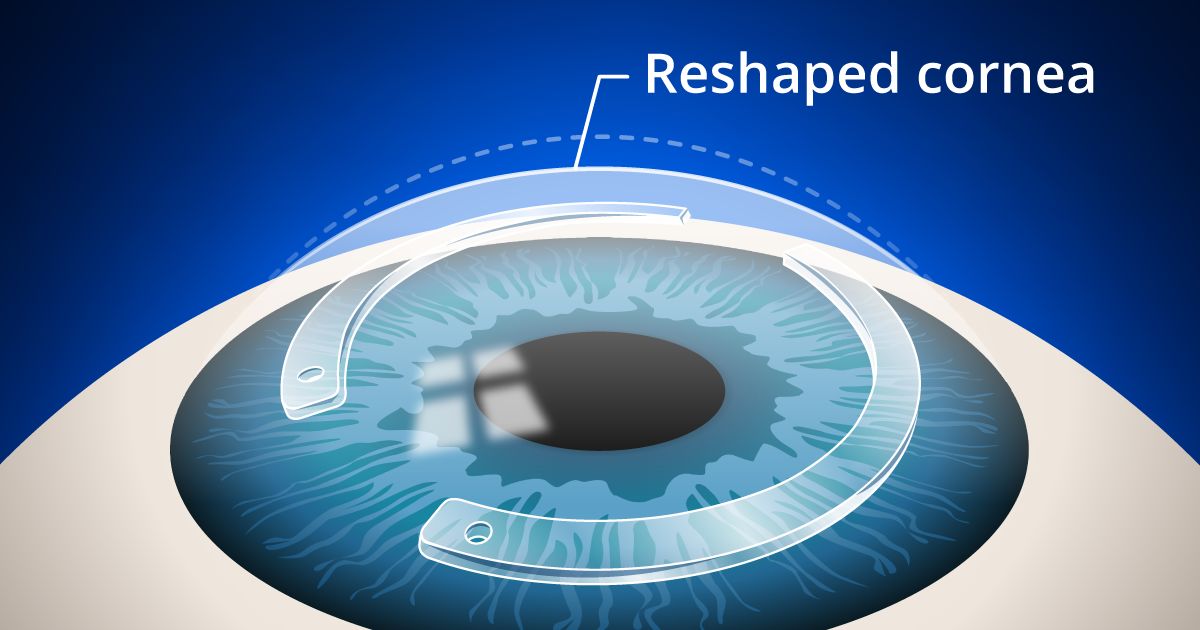
Arc-shaped corneal ring segment implants or more commonly referred to as intrastromal corneal ring segments (ICRS) are a minimally invasive surgical option used primarily for the treatment of keratoconus.
The corneal implants are designed for long-term vision correction. If you are among the 4 percent of people who are not satisfied with results or you have troubling visual symptoms, you can ask a surgeon to remove the implants.
ICRS can be replaced with different-size segments or removed for good. You have the option of replacing them with new rings at a later date if your prescription changes with age.
If the ICRS are removed, vision tends to return to the way it was before surgery within three months.
How do ICRS work?
For treating nearsightedness, the corneal arc-shaped ring segments correct vision by flattening the cornea to refocus light rays and improve vision. For keratoconus, ICRS work by flattening the steep part of the cornea or cone to reduce vision distortions.
ICRS are made of the same biocompatible material found in intraocular lenses used for cataract surgery, so there is typically little or no risk of adverse effects from the material.
In some cases, however, eye irritation, blepharitis or abnormal blood vessel growth in the cornea (neovascularization) may occur. Also, ICRS may produce no corrective effect in fewer than 5 percent of individuals with keratoconus.
The procedure takes about 15 minutes and is often done on an outpatient basis, but you will need someone to drive you home after surgery. Before surgery, your doctor places anesthetizing drops in your eye and may give you a mild oral sedative.
During the procedure, your surgeon creates a tunnel between layers of the corneal stroma, outside of the central optical zone.
The surgeon then chooses the appropriate ring thickness. A thicker ring in Intacs means more flattening of the cornea, which increases the level of vision correction achieved. After one or two crescent-shaped Intacs are inserted into the tunnel, the procedure is over.
After ICRS surgery
You'll probably rest for a while, then go home (have someone else drive you). Many people often have sharper vision the first day after surgery, but you may need a couple of days of relaxation to promote healing. You typically won't feel the corneal arc-shaped ring segments, because they are beneath the cornea's nerve endings.
Results of these implants will depend on the degree of keratoconus in each individual. People with milder cases of keratoconus may not need any lenses for additional vision correction. People with moderate keratoconus may require glasses or soft contact lenses for improved vision.
For more advanced cases, rigid gas permeable contact lenses may be needed to improve vision or to delay or prevent the need for a corneal transplant.
ICRS can be effective at changing the shape of the cornea and flattening the cone caused by keratoconus. But the procedure cannot halt the progression of keratoconus caused by weakening of the collagen (structural protein) within the corneal tissue.
A procedure called corneal cross-linking (CXL) uses a combination of a topical solution of vitamin B (riboflavin) and controlled UV light exposure to strengthen corneal collagen fibers and stabilize the cornea. In some cases, CXL is used in combination with ICRS for ideal treatment outcomes in progressive keratoconus.
Results of clinical trials for ICRS for keratoconus
Clinical trials of ICRS for keratoconus and other corneal thinning disorders have shown encouraging results.
Studies suggest that using ICRS along with corneal cross-linking helps control corneal ectasia better than cross-linking on its own. This benefit was seen even when the treatments were done at different times.
People who already have ICRS, or who choose not to have both procedures at once, may still see improvement if cross-linking is done later. More studies are needed to understand if doing the treatments in the opposite order would lead to similar results.
Other studies suggest that placing ICRS or corneal allogenic intrastromal ring segments (CAIRS) during the same visit as epithelial-on corneal cross-linking may offer a safe approach to help limit further worsening of corneal ectasia (corneal thinning and bulging).
Intacs for nearsightedness
Regarding the use of corneal arc-shaped ring segments for the correction of myopia, a literature review of 452 individuals who underwent the procedure found that 12 months after surgery, 97 percent of treated eyes had 20/40 vision or better, and 74 percent had 20/20 or better.
Just under 9 percent of patients requested to have their ICRS removed due to side effects such as glare, halos and night vision problems or because their vision was under- or over-corrected, and 3.8 percent required a secondary surgical procedure. There were no serious complications.
One of the benefits of the procedure is that the corneal ring segments can be removed if necessary. In other words, the procedure is reversible if outcomes aren't perfect.
A study of the reversibility of ICRS for nearsightedness, found that, at three months following removal of the corneal ring segments, 20 of 21 eyes returned to within 1.0 D of their preoperative refractive error and there were no surgical or postoperative complications.
Are you a candidate for ICRS?
If you are considering surgery for keratoconus, your first step is to have a comprehensive eye exam by an ophthalmologist who specializes in the procedure. He or she will examine your eyes and perform a number of measurements to determine if the procedure is likely to improve your vision.
If you are interested in arc-shaped corneal ring segment implantation for the correction of nearsightedness, you must be at least 21 years of age and have a stable eyeglasses prescription with no more than -3.0 diopters (D) of myopia and no more than 1.0 D of astigmatism.
After examining your eyes, your eye doctor can tell you more about arc-shaped corneal ring segments surgery. The cost of the procedure varies from surgeon to surgeon.
[Read the latest prices for LASIK and other procedures.]