The ideal contact lenses for you depend on many factors, including your visual needs and your reasons for wanting to wear contacts:
- If you want the sharpest vision possible, gas permeable (GP) lenses, also called rigid gas permeable (RGP) lenses, can be an appropriate option. Because they have a hard, polished surface, they typically provide sharper optical clarity than soft contact lenses.
- If you have astigmatism, gas permeable lenses or special soft contact lenses called toric contact lenses are often an ideal option. These lenses have special features to correct blurred vision caused by unequal corneal curvature (the more common type of astigmatism).
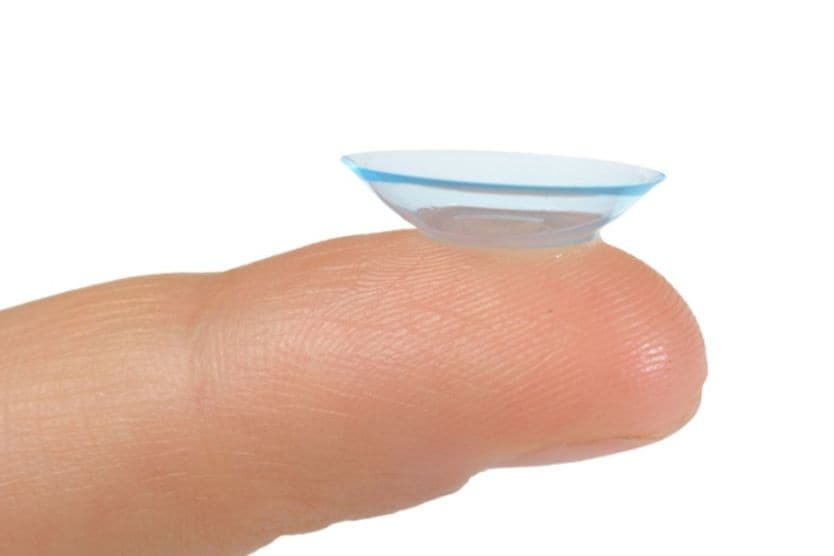
- If comfort is your primary consideration, conventional soft contact lenses may be the ideal choice. Many people find that soft contact lenses are immediately comfortable, whereas gas permeable lenses usually require a period of adaptation (that can be several weeks) before the lenses feel more comfortable.
- If you don't want to bother with lens care and contact lens solutions, daily disposable contact lenses may be an option to consider. With these soft contact lenses, you wear them just once and then throw them away.
- If you are over age 40 and have presbyopia, the appropriate lenses for you may be bifocal contacts or multifocal contact lenses. These lenses often can restore a full range of vision and may reduce or eliminate your need for reading glasses.
- If you are comfortable wearing eyeglasses and want to wear contacts only occasionally for sports or social events, soft contact lenses may be ideal. Many people can comfortably wear soft contacts on a sporadic basis, whereas gas permeable lenses usually have to be worn every day to maintain comfort.
Other factors also come into play when determining the type of contacts that may be ideal for you. For example:
- You may want extended wear contact lenses so you can wear the lenses continuously and not have to remove them before sleep. However, extended wear may not be recommended in some cases, so daily disposable lenses may be a more suitable option.
- You may need bifocal or multifocal contact lenses because you have presbyopia, but you find your vision with these lenses is not as sharp as you hoped it would be. In this case, monovision, where your eye doctor uses regular (monofocal) soft contact lenses to fit one of your eyes for distance vision and the other for near vision, may be an option to consider.
- Or perhaps a modification of monovision contacts, where one eye is fit with a monofocal lens and the other eye is fit with a multifocal lens, may be a potential solution.
- If you want the sharpest vision possible but you find you can't wear gas permeable lenses comfortably, perhaps hybrid lenses can address your needs. Hybrid lenses have a GP lens center for clarity, surrounded by a "skirt" of soft lens material for enhanced comfort.
The first step in determining which contacts are ideal for you is to schedule an eye exam and discuss available options with your optometrist or ophthalmologist.
Keep in mind, though, that initial plans may change during your contact lens fitting. Depending on your comfort, your vision and how well your eyes tolerate the initial lens choice, changes may need to be made.