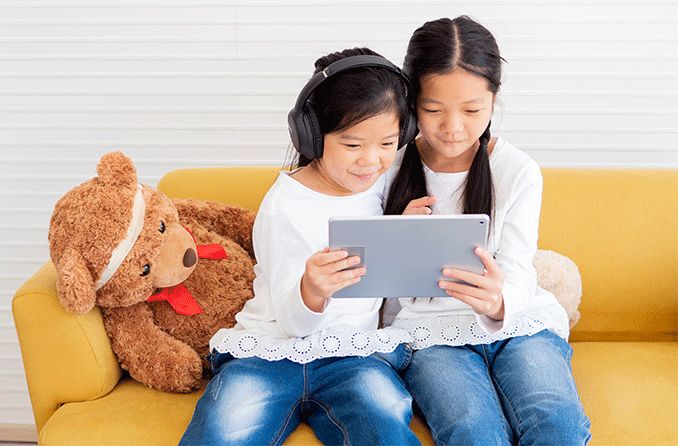
You check in to say good night to your son only to find he is playing a video game in bed.
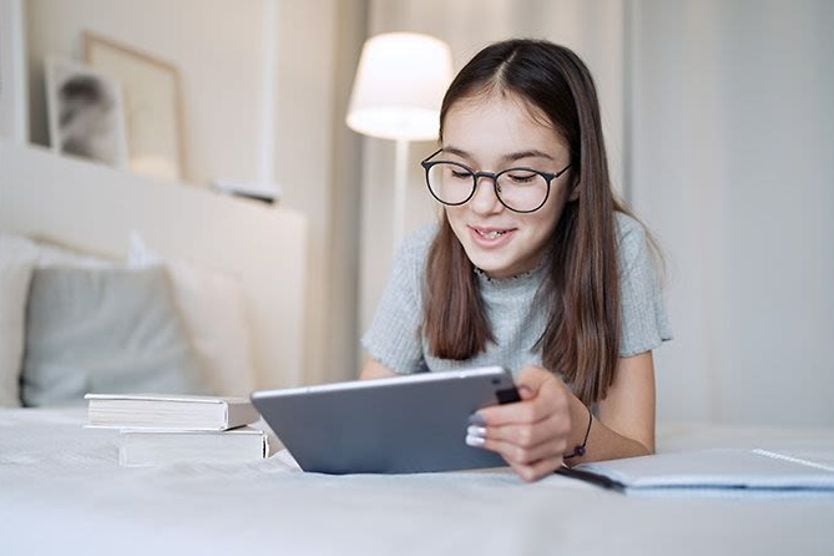
Or your daughter is busy texting when she is supposed to be studying.
Children and their phones are often inseparable today, and all that reading and playing games on their handheld devices may be harming their vision.
To reduce screen time, some parents ban phones at the dinner table. This may apply to both adults and children. And in some homes, playing games or texting stops two hours before bedtime.
To put a hard stop on screen time, some moms and dads set time limits on their children's daily device use. For example, when a total of two hours of screen time has been reached, no more texting, game playing or watching videos.
Definition of "screen time"

Statistics show 72 percent of American parents report their children routinely engage in more than two hours of screen time per day. And it's very likely many kids actually spend significantly more time staring at screens than their parents think they do.
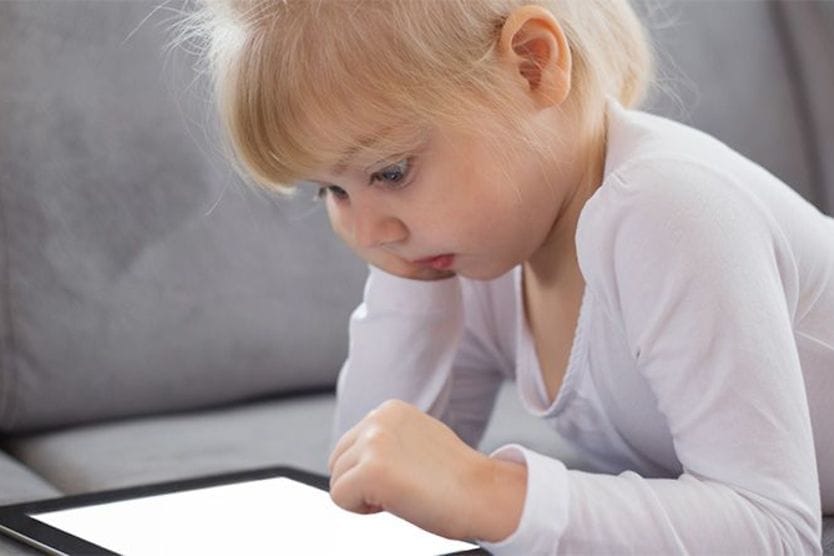
As kids grow, their screen time tends to grow with them. And even very young children these days are spending a significant amount of time each day staring at screens. According to one survey, young children in the U.S. spend the following amount of time each day using digital devices:

- Kids under 2 years of age: 42 minutes per day
- Kids ages 2 to 4: 2.5 hours per day
- Children ages 5 to 8: nearly 3 hours per day
And 30 percent of parents report their children may experience at least one of the following symptoms after being exposed to more than two hours of screen time per day:
- Headaches
- Neck/shoulder pain
- Eye strain, dry or irritated eyes
- Reduced attention span
- Poor behavior
- Irritability
Any of these symptoms could potentially affect academic performance and social interactions.
The rapid rise of myopia, or nearsightedness, worldwide has been linked to increased use of and exposure to electronic devices.
In Singapore, for example, 65 percent of students in Primary 6 (Grade 6 or middle school in the U.S.) may be myopic. In the United States and Europe, where myopia rates traditionally have been lower, around half of young adults now may have myopia compared with 25 percent in the 1970s.
READ NEXT: Screen time recommendations by age
The impact of blue light
The LED screens of computers and portable digital devices emit a broad spectrum of visible light. These light rays include a variety of different wavelengths, including a type of high-energy visible light called "blue light."
Blue light has shorter wavelengths and higher energy than other visible light rays, and the majority of exposure comes from the sun, even indoors.
Blue-turquoise light plays an important role in regulating our body's circadian rhythm. This basically is an internal clock that's running in our brain and cycles between alertness and sleepiness at regular intervals over a 24-hour period. It's also called our sleep/wake cycle.
Too much exposure to this blue light at the wrong time of day can disrupt a person's sleep/wake cycle. Due to this, it is helpful to ensure that your child is not on their digital device too close to bedtime.
SEE RELATED: What are blue light glasses? Do you need them?
Strategies that may benefit eye health
So then, what can a parent do to prevent too much screen time and try to help eye health?
Kids may not reduce their use of digital devices on their own. So the answer may lie in taking steps to limit the amount of time they are spending on their devices and teaching them strategies that benefit their eye health.
Too much time looking at screens may cause some visual discomfort. To address this, you may practice the 20-20-20 rule: Every 20 minutes, you may look at something 20 feet away for 20 seconds.
If decreasing screen time is not an option, it may be worthwhile to look into computer glasses. These glasses may make it easier to focus on the screen, which can improve long-term viewing comfort. Some computer glasses also have a blue light filter.
Appropriate eyeglasses and sunglasses

The sun emits much more blue light than digital devices. It is recommended that children wear sunglasses outdoors to reduce their exposure to harmful blue light and ultraviolet (UV) light.
If your child wears glasses, one solution may be to purchase eyeglasses with lenses that reduce the amount of UV light that enters the eyes. A number of lens manufacturers produce eyeglass lenses that can do this.
Another option is to have an anti-reflective coating applied to the lenses.
A third option is to purchase glasses with photochromic lenses. These sun-sensitive lenses have the added advantage of automatically blocking UV light outdoors without the need for a separate pair of prescription sunglasses.
Yet another option is a pair of polarized sunglasses for outdoor wear.
Screen filters
But what if your child doesn't need prescription glasses?
One convenient option in this case is to purchase a screen filter that can be applied to the surface of your child's digital devices. These filters can help reduce glare and increase visual comfort.
Also, you may want to use the blue-light filtering features on certain devices, or multi-platform apps that block blue light.
Set limits on screen time
To reduce the risk of your child disrupting his or her sleep/wake cycle, consider creating a "no-screens" rule at least an hour or two before their scheduled bedtime.

Or you may want to set a time limit on your child's phone use. Various tech companies have introduced time management features and apps that allow you to monitor your child's daily screen time. You can visit your phone vendor's website or store to learn more.
One goal maybe? Spending more quality time together may help your son or daughter to have less time left to their own devices.
There are many strategies to implement screen time limits and encourage good visual habits while they're watching videos, posting and playing games.
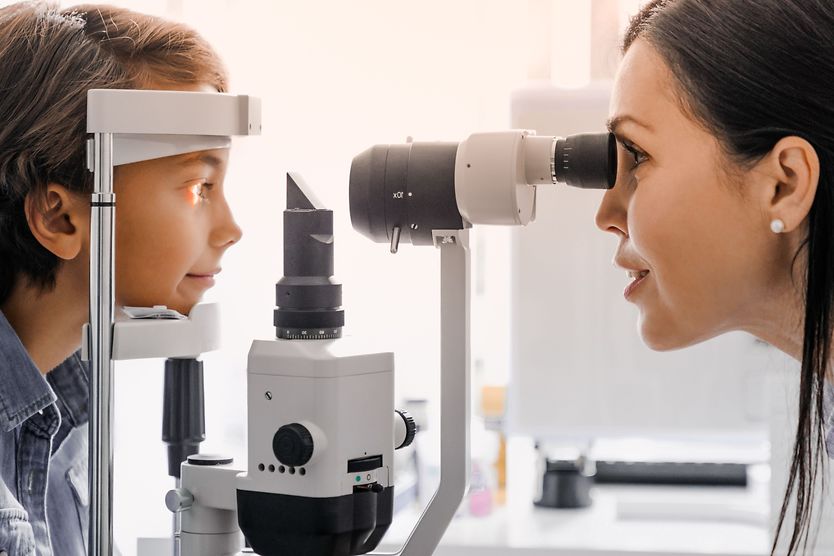
Finally, it is recommended to schedule annual comprehensive eye exams with an eye doctor near you to monitor your child’s vision and eye health. And it may be a good idea to ask your eye doctor about the most appropriate lens options to help improve your child’s visual comfort during screen time.
READ NEXT: Tips to reduce your child's risk of computer vision problems