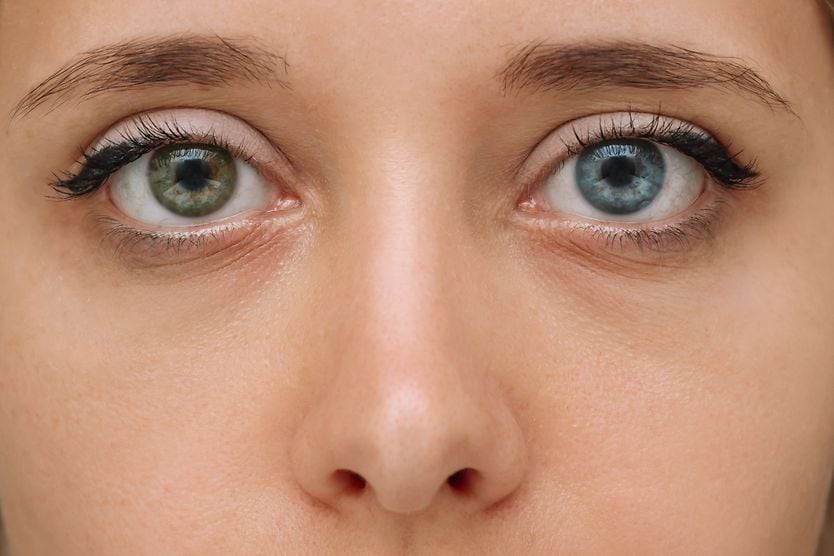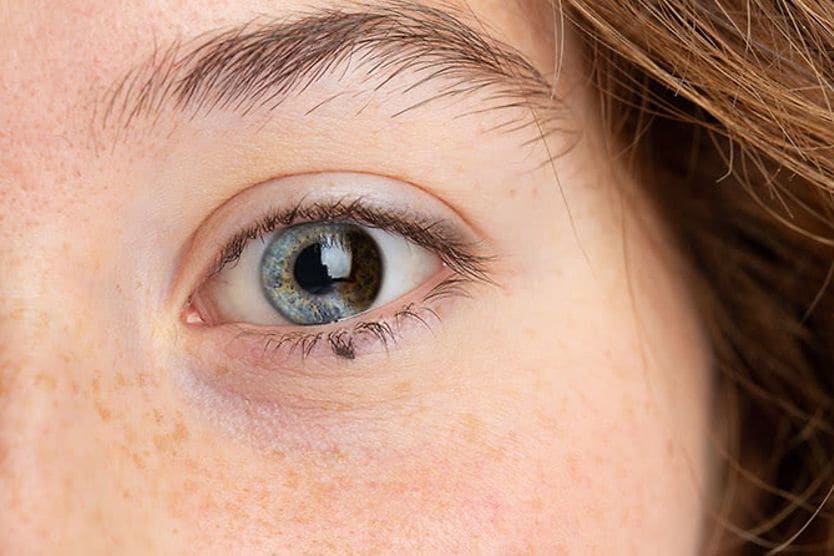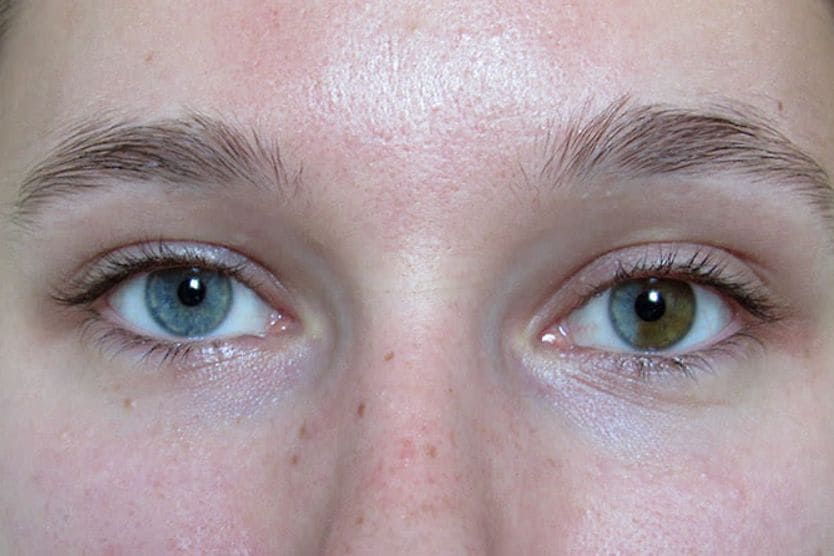
Heterochromia is a relatively rare, benign trait that occurs when the melanin in the eyes is inconsistent, which leads to color variations in one or both irises. It is more often than not simply a matter of genetics, although heterochromia may occasionally be the result of injury or an underlying condition.
There are three types of heterochromia: partial (sectoral) heterochromia, complete heterochromia and central heterochromia. Color variations can range from flecks of gold in blue or green eyes to two completely different colored eyes — it all depends on the type of heterochromia experienced.
What causes heterochromia?
There are a number of factors that can cause heterochromia. Many times, infants are born with the condition, although in rarer instances, it can be acquired later in life.
Genetics
Although the trait is uncommon, heterochromia is usually inherited and exists at birth or occurs soon after as a result of a genetic abnormality. When heterochromia is present at birth, it is referred to as congenital heterochromia, and the majority of the time, no other symptoms are present.
Conditions that can cause heterochromia
When heterochromia occurs at birth or in the early stages of life, it may be caused by an underlying medical condition. Some of these conditions may include the following:
- Horner’s syndrome
- Sturge-Weber syndrome
- Bourneville disease
- Waardenburg syndrome
- Piebaldism
- Hirschsprung disease
Illness or injury
Heterochromia may also occur later in life — referred to as acquired heterochromia — due to illness or injury. Some circumstances that could result in acquired heterochromia may include:
- Eye trauma or injury
- Eye surgery
- Swelling as a result of uveitis
- Ocular melanosis
- Tumors of the iris, whether malignant or benign
- Glaucoma
- Fuchs’ heterochromic cyclitis
- Pigment dispersion syndrome
- Acquired Horner’s syndrome
SEE RELATED: Celebrities with heterochromia
Medication
Some medications and eye drops taken for glaucoma and other eye conditions may also play a part in causing heterochromia. Some of these may include:
- Glaucoma medication
- Bimatoprost, once used to treat glaucoma, though it is now used cosmetically to thicken eyelashes
Most heterochromia does not have additional symptoms or discomfort, but if you notice a change in your eye color (especially if it’s accompanied by pain), contact your eye doctor to schedule a comprehensive eye exam.