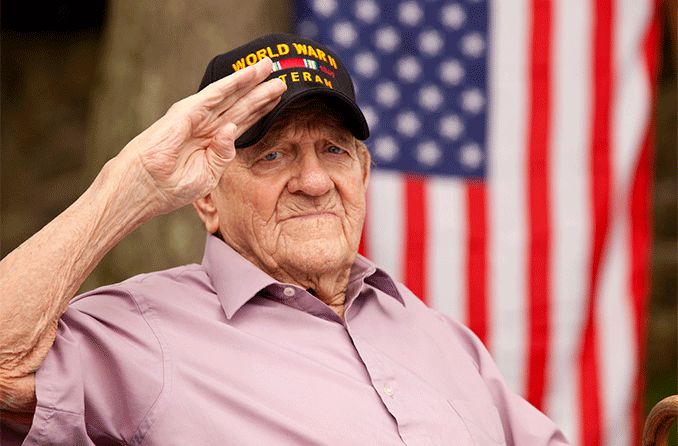
More than 130,000 U.S. military veterans are legally blind, and over 1 million veterans have low vision. Fortunately, a variety of resources are available for visually impaired veterans.
Among older veterans, major causes of vision loss include age-related macular degeneration (AMD), glaucoma, cataracts, stroke and diabetic retinopathy. Some veterans who served in Iraq and Afghanistan experience blast-related brain injuries that can lead to blurred vision, double vision, sensitivity to light and difficulty reading. Nearly two-thirds of servicemembers with traumatic brain injuries may suffer vision problems, while eye injuries account for 10% to 15% of combat casualties.
On average, members of the U.S. armed services suffer 15,681 eye injuries per year. In addition, a yearly average of almost 4,400 cases of traumatic brain injury not accompanied by an eye injury cause visual impairment. In 2026 dollars, this equals an estimated annual cost of treatment, benefits and potential lost productivity of $3.2 billion related to these eye injuries and traumatic brain injuries.
Veterans with vision impairment caused or aggravated by active-duty service may qualify for benefits, such as tax-free monthly payments, from the U.S. Department of Veterans Affairs (VA). If their vision impairment isn’t connected to active-duty service, a veteran still may qualify for treatment or rehabilitation from a VA center or program. To schedule an eye exam, contact your nearest VA medical center.
The VA introduced a comprehensive blindness and vision rehabilitation program in 2008 with establishment of the Vision Center of Excellence, shared by the VA and the U.S. Department of Defense. The center is located at Walter Reed National Military Medical Center in Bethesda, Maryland.
What follows is a roundup of resources for veterans who are visually impaired.
Blind Rehabilitation Centers
The VA operates 13 Blind Rehabilitation Centers. These inpatient centers help veterans adjust to their blindness, assisting with skills such as:
- Mobility
- Visual skills
- Manual skills
- Communication skills
- Daily activities
- Computer use
- Social and recreational activities
The Blind Rehabilitation Centers are in:
- Augusta, Georgia
- Biloxi, Mississippi
- Birmingham, Alabama
- Cleveland, Ohio
- Hines, Illinois
- Long Beach, California
- Palo Alto, California
- San Juan, Puerto Rico
- Tacoma, Washington
- Tucson, Arizona
- Waco, Texas
- West Haven, Connecticut
- West Palm Beach, Florida
The care of visually impaired veterans in rural areas is of particular concern. Rural veterans often face barriers to care, including distance and limited access to providers or the internet.

Golf for vision-impaired veterans
Nine of the VA’s Blind Rehabilitation Centers provide instruction in what’s known as “blind golf” to veterans with blindness or low vision.
As part of their rehabilitation, World War II veterans were introduced in the 1940s to the game of golf. The Blind Rehabilitation Center in Hines, Illinois, added blind golf to its offerings in 1948. That’s the same year that the United States Blind Golf Association was founded.
Intermediate and Advanced Low Vision Clinics
Operated by the VA, intermediate and advanced low vision clinics are outpatient locations where veterans can receive services that go beyond what’s offered at VA eye clinics. These include eye exams, use of vision-enhancing devices and training in visual skills. Specialists at these clinics help with daily tasks such as reading, writing, cooking and managing medications.
Vision Impairment Services in Outpatient Rehabilitation (VISOR) programs
VISOR programs provide short-term rehabilitation for blindness or vision problems. They last about two weeks and include overnight accommodations for those who need lodging. VISOR participants must be able to carry out daily living activities on their own.
Aside from the variety of services provided at the Intermediate and Advanced Low Vision Clinics, VISOR offers training in communication, computer use and daily living. Skills that may be covered include typing, handwriting, telling time, managing financial records, preparing meals and arranging a wardrobe.
Advanced Ambulatory Low Vision Clinics
These 23 clinics emphasize vision skills and vision enhancement, enabling a veteran to better carry out daily activities. This includes travel and other mobility-related activities.
Visual Impairment Centers to Optimize Remaining Sight (VICTORS) program
VICTORS complements the VA’s 13 Blind Rehabilitation Centers. The outpatient program cares for veterans with significant visual impairment (20/70 to 20/200 visual acuity or worse; significant visual field loss; or both). The program features specialists in optometry, ophthalmology, social work, psychology and low vision therapy.
The VICTORS locations are:
- Northport, New York
- Palo Alto, California
- Lake City, Florida
Blind Rehabilitation Outpatient Specialist (BROS) program
In the BROS program, specialists teach skills to blind veterans at their own homes or at VA medical centers. A BROS instructor is well versed in at least two of these disciplines: orientation and mobility, living skills, manual skills and visual skills.
VA Telehealth
Telehealth services for veterans continue to expand, including for eye care. The VA currently has three Telehealth programs:
- Eye Screening for preventive care
- Technology-based eye care for glasses prescriptions and eye exams
- Low vision eye care for helping veterans find the best vision aids for their needs
These programs help improve access to eye care in both rural and urban areas. They allow veterans to meet virtually with eye care specialists from their local VA clinics.
Ocular trauma centers
Section 721 of the National Defense Authorization Act for Fiscal Year 2022 mandated the establishment of at least four Regional Ocular Trauma Centers within the Defense Health Agency (DHA) for the treatment of ocular wounds and vision dysfunction related to traumatic brain injury.
The four designated centers are:
Brooke Army Medical Center (San Antonio, TX)
Walter Reed National Military Medical Center (Bethesda, MD)
Madigan Army Medical Center (Joint Base Lewis-McChord, Washington)
Naval Medical Center San Diego (San Diego, CA)
Guide dogs
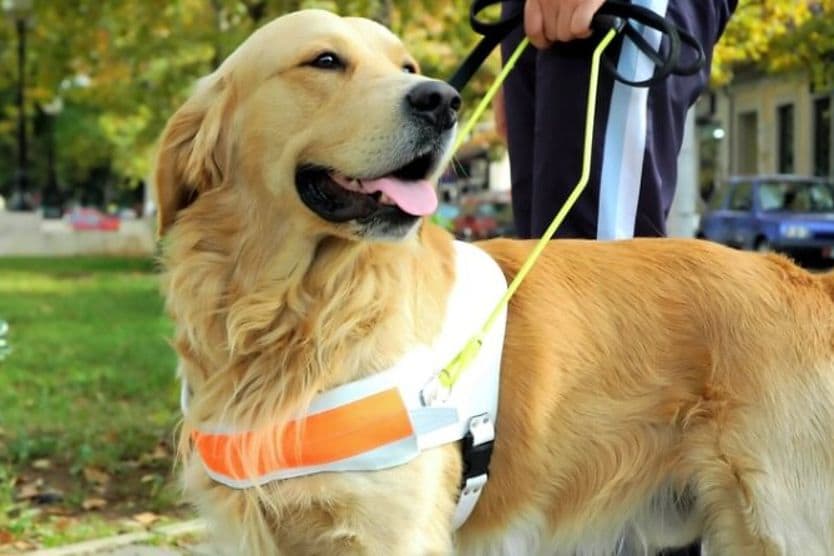
The VA supports guide dogs that help blind and visually impaired veterans avoid obstacles. These dogs aren’t provided by the VA. Veterans who are approved for a guide dog are referred to accredited organizations.

Research programs
VA researchers and universities are working on projects aimed at:
- Improving vision testing.
- Repairing or easing vision loss due to disease or injury.
- Learning more about the connection between injury and vision loss.
- Increasing the independence of veterans with blindness or low vision.
- Improving access to eye care for veterans living in rural areas.
- Detecting disorders that potentially cause blindness, such as glaucoma and traumatic brain injury.
- Offering greater access to telemedicine.
- The potential for eye transplants.
Technology for veterans with vision problems
Several inventions can help vision-impaired veterans see better.
Wearable sight-enhancing devices available through the VA to veterans with low vision.
These devices rely on high-resolution screens, smart algorithms and cutting-edge cameras to help a person with low vision see clearly and lead an active, independent life.
Another option is a low vision headset available to veterans through the VA. These headsets help people with eye conditions such as age-related macular degeneration, glaucoma, retinitis pigmentosa, diabetic retinopathy, optic nerve damage and cataracts.
Visually impaired veterans may also be eligible for a device that mounts on a person’s eyeglasses, helps them read text, identify faces, pick out products while shopping and recognize barcodes. These devices respond to hand gestures and voice commands.