One of the more common vision conditions is the loss of reading vision caused by a normal, age-related condition called presbyopia.
Presbyopia affects virtually everyone sometime after age 40 — even if you've had 20/20 vision the majority of your life or you had your eyesight corrected with LASIK or PRK when you were younger.
In the past, the usual approach for presbyopia was to wear reading glasses or multifocal eyeglasses, such as bifocals or progressive lenses.
A number of attempts have been made to develop a surgical correction for presbyopia over the years. Some, such as conductive keratoplasty (CK), initially showed promise, but haven't gained widespread use by refractive surgeons.
The following is a brief summary of the common types of surgery for presbyopia.
Monovision LASIK
A surgical option surgery for presbyopia that can reduce the need for reading glasses is monovision LASIK. In this technique, the LASIK surgeon corrects the distance vision of one eye (usually the dominant eye), and intentionally makes the non-dominant eye mildly nearsighted.
Monovision LASIK can be effective in lessening near vision problems caused by presbyopia because a mildly nearsighted eye typically sees near objects clearly without glasses. So, after monovision LASIK, the dominant eye takes the lead to provide clear distance vision and the non-dominant eye is responsible for sharpening near vision.
Monovision of any kind — whether it's monovision LASIK or monovision with contact lenses — involves some compromise. Though the two eyes continue to work together as a team, distance vision typically is not as clear after monovision as it would be if the non-dominant eye weren't nearsighted.
Still, many people who undergo monovision LASIK feel the convenience of being able to see acceptably well at all distances without glasses is worth the tradeoff of accepting the minor loss of clarity in distance vision that monovision entails.
Also, if additional distance vision clarity is desired for specific activities (such as driving at night) after monovision LASIK, special-purpose eyeglasses or contact lenses can often be prescribed that correct the nearsightedness in the non-dominant eye and optimize distance vision.
Monovision conductive keratoplasty
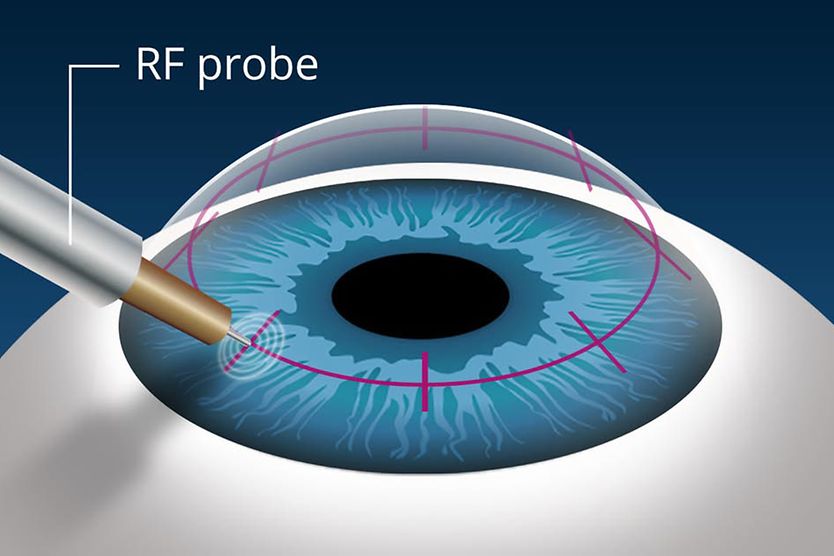
Conductive keratoplasty (CK) uses low-level, radio frequency energy to shrink collagen fibers in the periphery of the cornea. This steepens the central cornea, in effect lengthening a too-short eye and providing more up-close focusing power.


An eye surgeon performing CK first numbs the eye. A circular treatment pattern is then imprinted in ink on the cornea. This pattern helps guide a tiny probe as radio waves are applied to shrink collagen. The treatment can result in sharper near vision.
CK was FDA-approved in 2002 for the temporary reduction of farsightedness, then received approval in April 2004 for the temporary improvement of near vision in people with presbyopia.
In a monovision technique called CK for near vision, conductive keratoplasty is performed on one eye only — usually the non-dominant eye — to correct presbyopia in a person who can see well in the distance without glasses or contact lenses, but who needs help with near vision.
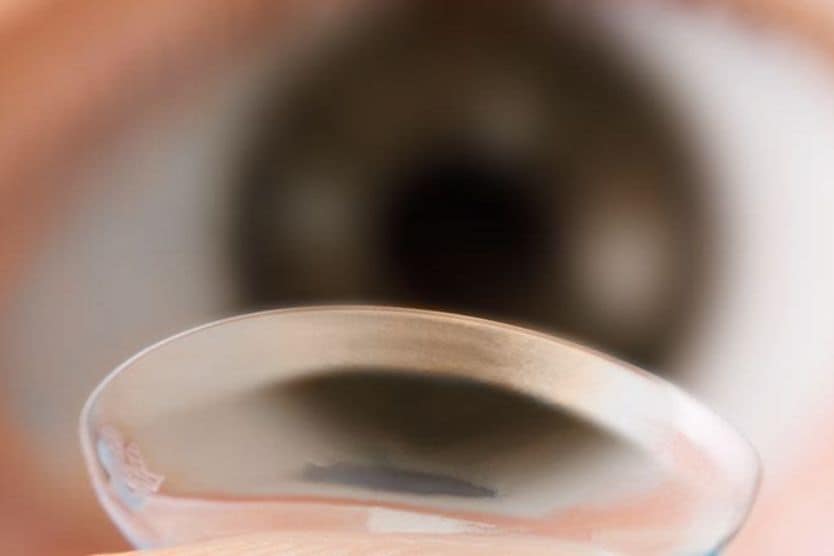
Again, it's a good idea to try monovision with contact lenses or a trial lens in the eyeb doctor's office before undergoing CK for near vision to make sure you can likely adapt to it.
After the three-minute procedure, you'll likely notice improvement in your reading vision, but it can take a few weeks before you reach the final level of vision correction.
One notable feature of CK is that it is minimally invasive. Some people experience tearing, foreign-body sensation and/or vision fluctuation, but this is usually only temporary.
Refractive lens exchange (RLE)
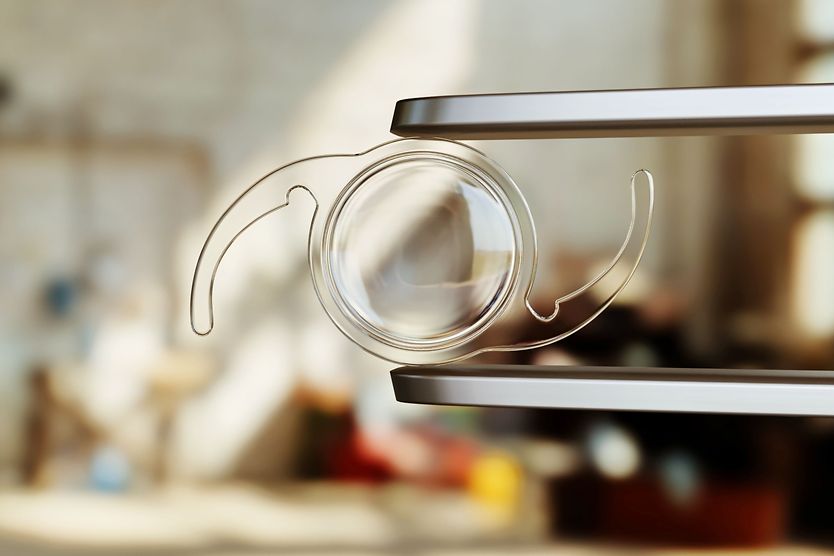
Refractive lens exchange is the removal and replacement of the eye's natural lens with an artificial intraocular lens (IOL) to improve vision. The procedure is very similar to cataract surgery, but in RLE, the natural lens being removed has not yet become cloudy with a cataract.
Refractive lens exchange can effectively reduce the need for reading glasses with the use of a multifocal IOL or an accommodating IOL. Both of these types of premium IOLs can restore significant near vision while providing clear distance vision without glasses.
Another option is to have your eye surgeon give you a monovision correction with refractive lens exchange.
Multifocal LASIK (PresbyLASIK)
Different zones in a multifocal artificial lens correct vision at near, intermediate and far ranges. In an investigational procedure known as multifocal LASIK or presbyLASIK, similar zones are created on the eye's clear front surface (cornea) with an excimer laser to correct presbyopia.
PresbyLASIK is an investigational procedure, which is not yet FDA-approved, but is available outside of the United States in Canada and Europe. U.S. clinical trials investigating the effectiveness and safety of the procedure are currently being conducted.