LASIK (laser assisted in situ keratomileusis) eye surgery results have continued to improve, along with supporting technology and surgeon skill, which should offer some reassurance to candidates who are unsure about what to expect.
Thanks to LASIK, many people throughout the world are less dependent on glasses or contact lenses. Still, the decision to have LASIK should be approached with caution. Because surgery is involved, some potential risks, though often rare, can be associated.
Because LASIK is an elective procedure, you will be contemplating surgery on an otherwise healthy eye. For that reason, always consider that you have the option of nonsurgical alternatives, such as glasses and contact lenses.
When considering LASIK, do some homework and consult with your eye doctor to learn more about the procedure. Ask about potential LASIK complications as well as visual outcomes.
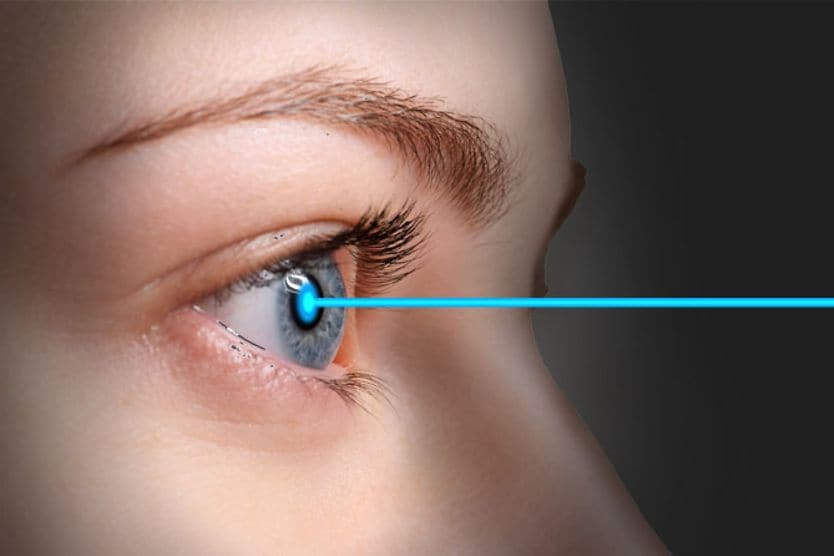
Inquire about the technology your LASIK surgeon uses for the procedure. In LASIK, an ultra-thin, hinged flap is lifted from the surface of your eye. After laser energy is applied to reshape the cornea, the flap is replaced to serve as a type of natural bandage.
Does your surgeon prefer a blade-created flap or a laser-created flap associated with the recent innovation of bladeless LASIK? Consider also that newly developed eye-tracking technology in an excimer laser helps make inadvertent eye movement less of a problem during a procedure.
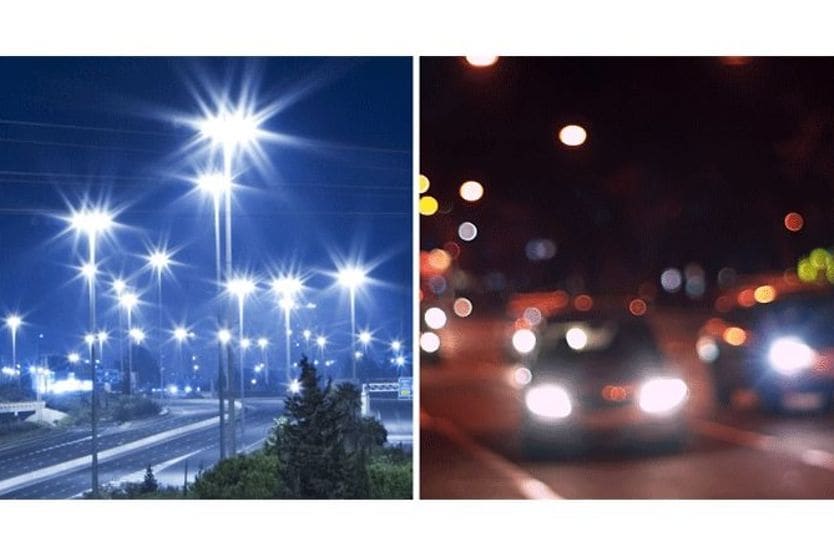
Also, custom or wavefront-guided LASIK can reduce the chance of nighttime visual problems such as glare and halos.
After you go through the education process to understand your treatment options and the available technology, it is important to understand your surgeon's level of experience. After a balanced discussion about all these issues, you can be more prepared to make an educated decision, which could improve your chance of an ideal LASIK outcome.
Possible LASIK complications
LASIK carries a slight risk of short- and long-term complications. Many people respond well to treatment, but some cases may be more difficult. In some cases, permanent problems can result.
LASIK complications can include:
- More serious problems such as eye infection, chronic dry eye and LASIK flap problems.
- Less serious complications that generally clear up on their own as the LASIK flap heals, including halos, haze and glare.
Studies consistently show that LASIK complications decline as surgeon experience increases. So you can typically increase your chance of a good outcome by choosing an experienced surgeon.
It's also important to remember that your general health and eye health both influence the risk of certain complications. For example, you may be at greater risk of LASIK complications if you have a disease such as diabetes that can interfere with your body's normal healing responses. Of course, you will need to discuss your general health with your eye doctor.
Also consider that, even under the most ideal circumstances, each patient responds and heals differently after eye surgery.
LASIK studies and safety standards
The eye care community sets high standards for LASIK success. For a LASIK laser to receive FDA approval, manufacturers are expected to have adverse event rates of less than 1 percent during clinical trials.
The FDA definition of adverse event includes a list of specific problems such as corneal swelling, flap problems, uncontrolled intraocular pressure and a detached retina.
At this time, no central database of LASIK outcomes exists. Most of what is known about visual acuity outcomes after LASIK comes from individual clinical studies, including premarket approval trials required by the FDA, as well as the FDA's PROWL studies (we will talk about this later), which assessed patient-reported outcomes and satisfaction.
Many clinical studies of LASIK vision outcomes have a few elements in common. These include:
- An assessment of how many people achieve 20/20 vision or better (so-called "perfect" vision) and how many achieve 20/40 vision or better (the minimum visual acuity required to obtain a driver's license in most states).
- A discussion of how many people get to within one diopter or a half diopter of zero refractive error. (Myopia, hyperopia and astigmatism are all refractive errors. Zero refractive error is called emmetropia.)
- Details about possible adverse events associated with LASIK.
To monitor vision changes during the LASIK recovery period, many studies measure visual outcomes immediately after surgery, several days later and at one, three and six months after the procedure.
Comparing outcomes of LASIK lasers
The FDA has approved several LASIK lasers for the treatment of myopia and hyperopia, with or without astigmatism.
When considering FDA studies, however, it is impossible to compare outcomes produced by different lasers head-to-head. This is because people who were enrolled in one study may have had different characteristics than those who participated in a LASIK study for another company's laser.
Results from the same laser also can vary, depending on how people were selected for the study. Some studies may eliminate those with higher amounts of refractive error, for example, while others may need to assess results specifically for these types of vision problems.
Furthermore, more recent outcomes from these lasers may be improved, as surgeons have gained experience and laser hardware and software improvements have been made after FDA approval.
Best-corrected vision after LASIK
The most feared outcome of LASIK is often a decrease in best possible vision, something doctors call best corrected visual acuity (BCVA), or sometimes best spectacle-corrected visual acuity (BSCVA).
In other words, if you can be corrected to 20/20 with glasses or contact lenses before undergoing LASIK, you'd like to be correctable to at least 20/20 after LASIK (if LASIK falls short of giving you 20/20 uncorrected vision).
For example, if you have 20/200 uncorrected vision before LASIK and see 20/20 with contact lenses or glasses, then see 20/40 uncorrected after LASIK but are correctable to only 20/25 with contacts or glasses, you have lost one line of BCVA (from 20/20 to 20/25) on a standard eye chart.
But even though you lost one line of best corrected visual acuity, you gained more than six lines of uncorrected vision (from 20/200 to 20/40).
The FDA expects laser manufacturers to show that no more than 5 percent of patients in clinical trials lose more than two lines of BCVA and that less than 1 percent of patients have BCVA worse than 20/40.
How well can you expect to see after LASIK?
In response to consumer concerns about the safety and effectiveness of LASIK surgery, the FDA, the National Eye Institute (NEI), and the Department of Defense (DoD) launched the LASIK Quality of Life Collaboration Project (LQOLCP).
Goals of the project included:
- To help better understand the risks of LASIK surgery
- To identify visual symptoms that can result from LASIK
- To determine the percent of patients who experience difficulties performing their usual activities following LASIK
- To determine overall patient satisfaction with LASIK surgery
Two studies called the Patient-Reported Outcomes With LASIK (PROWL) studies were developed and conducted as part of the project. Both studies assessed patients' visual symptoms before and after their LASIK surgery to identify changes over time. The studies also measured the effect LASIK had on patients' abilities to perform normal daily activities without corrective lenses after the surgery.
The PROWL-1 study was conducted at a refractive surgery clinic and included 262 active duty participants. The PROWL-2 study included 312 civilian participants across the country. Both studies were completed in 2014 and data was collected from patient questionnaires to evaluate outcomes.
Key findings from the Patient-Reported Outcomes With LASIK studies were:
- Up to 46 percent of participants who had no visual symptoms before LASIK surgery reported at least one visual symptom three months after the procedure.
- Halos around lights was the most commonly reported visual symptom after LASIK surgery. Up to 40 percent of participants who reported no halos before LASIK had halos three months following surgery.
- Dry eyes also was a common occurrence after LASIK. Up to 28 percent of participants with no symptoms of dry eyes before LASIK reported dry eye symptoms at three months after their surgery.
- Other potential visual symptoms after LASIK include starbursts, ghosting and glare.
- Less than 1 percent of study participants experienced "a lot of difficulty" with or an inability to do usual activities without eyeglasses or contact lenses because of visual symptoms after LASIK surgery.
- More than 95 percent of the study participants were satisfied with their vision following LASIK surgery.
In other research of the safety and effectiveness of LASIK, investigators from the U.S. and Germany recently conducted a literature review of 97 peer-reviewed clinical studies of LASIK vision correction that were published between 2008 and 2015. A total of nearly 68,000 LASIK-treated eyes and 30 different laser systems were included in these studies.
Results of this analysis revealed:
- 20/20 or better vision was achieved in 90.8 percent of the 56,000 eyes that reported visual acuity data.
- 99.5 percent of patients could see 20/40 or better without corrective lenses after LASIK.
- Overall, 90.9 percent of patients were within 0.5 diopter (D) of the targeted vision correction, and 98 percent were within 1.0 D.
- Less than 1 percent of patients lost 2 lines of best-corrected visual acuity on a standard eye chart (among 58,653 procedures reporting these data).
Also, the studies that provided data on patient satisfaction found only 1.2 percent of patients were dissatisfied with their LASIK outcome.
Keep in mind that you might have minor refractive errors remaining after LASIK surgery that may be too insignificant to undergo a second laser treatment but that can cause some blurriness.
If this is the case, you might want to purchase a pair of glasses for use as needed for activities like driving at night. Also, depending on your age, you might need progressive lenses to see at all distances or reading glasses to see small print.
If sensitivity to light is a problem after LASIK, glasses with photochromic lenses could be helpful.
LASIK results and your eye surgeon
LASIK is like many other surgical procedures. Where you start is an important predictor of where you end up. Results can be affected by the health of your body in general, your eyes in particular and the status of your current vision.
And, as with all other surgical procedures, surgeon skill and experience are major factors that cannot be overlooked.
To understand expected LASIK outcomes and potential complications for your particular situation, have a thorough pre-surgical consultation with an experienced refractive surgeon.