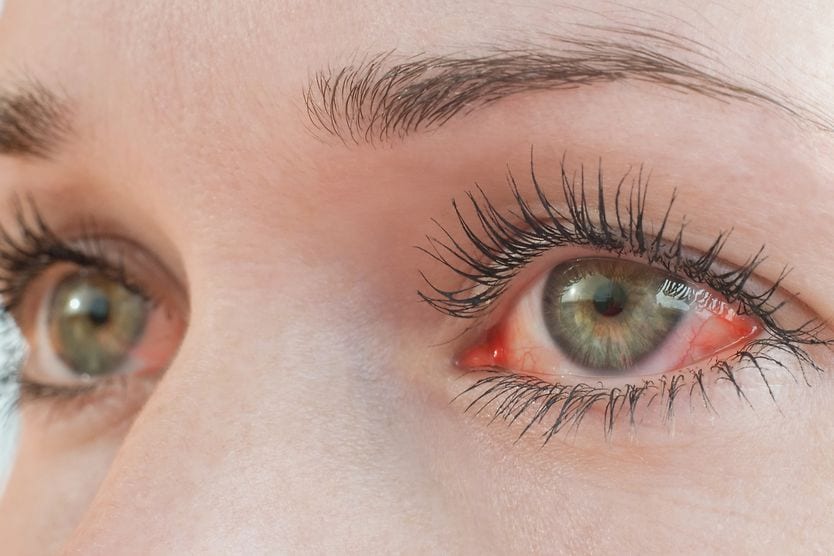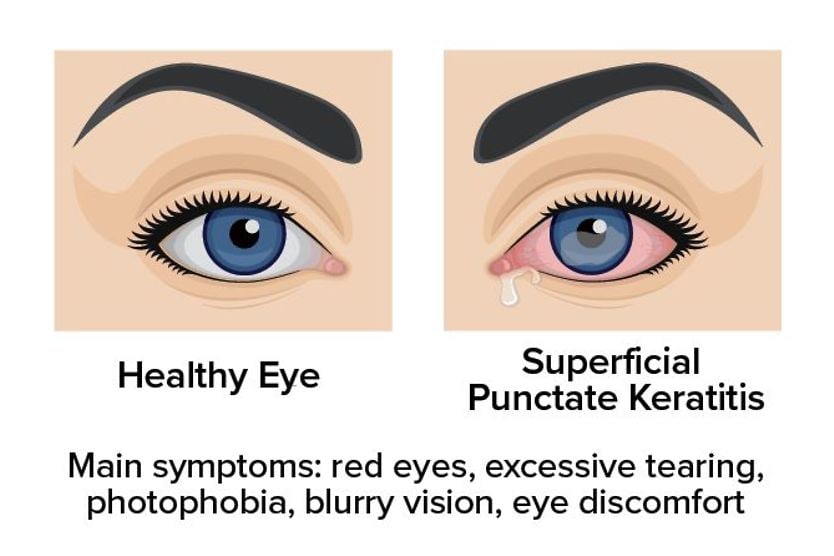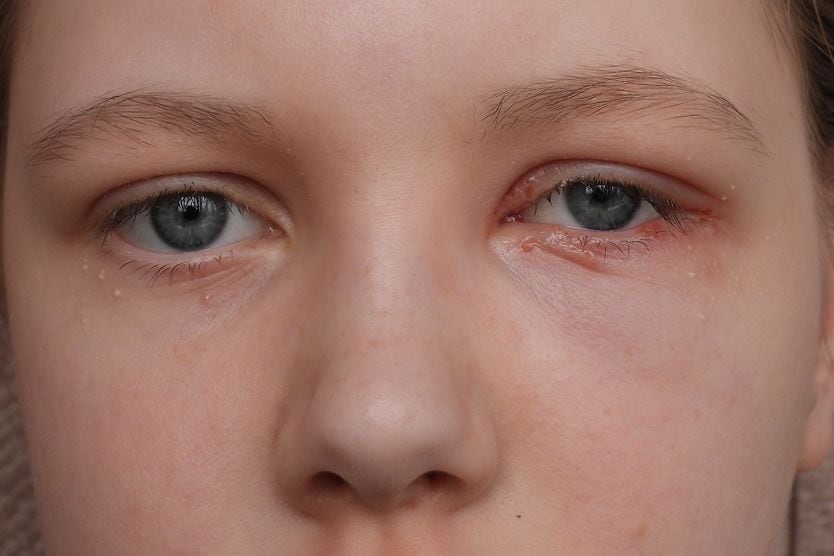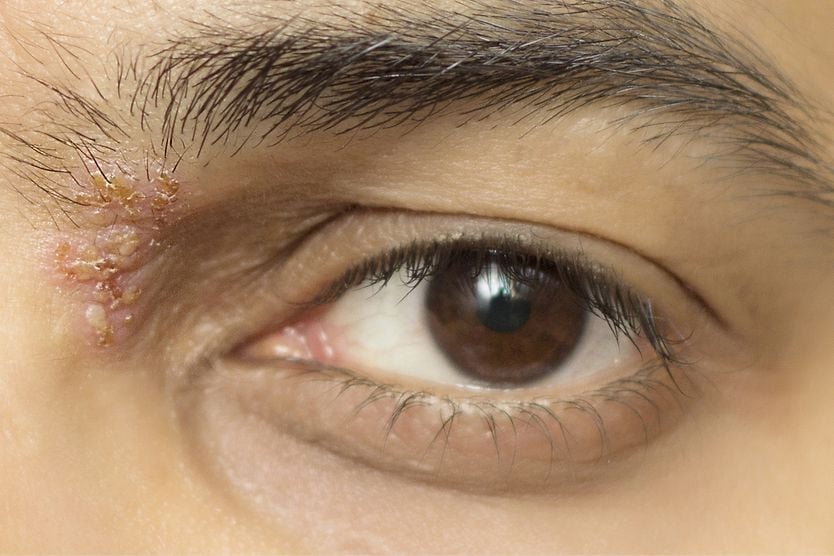
Acanthamoeba eye infections in contact lens wearers are rare but serious complications that often start because of improper lens handling and poor hygiene. If you have eye pain, eye redness that won’t clear up with drops, blurry vision, light sensitivity, excessive tearing or feel as if there is something in your eye, you should see your eye doctor.
If untreated, Acanthamoeba keratitis can cause severe pain and possible vision loss or blindness.
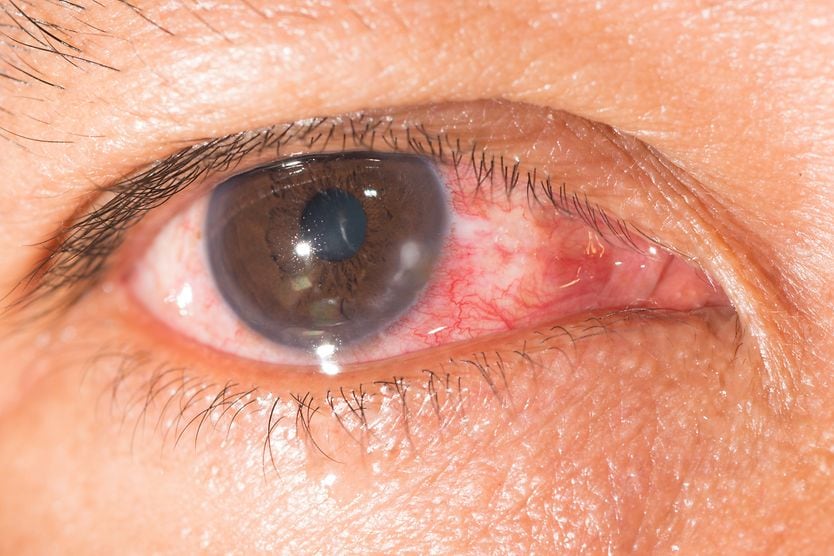
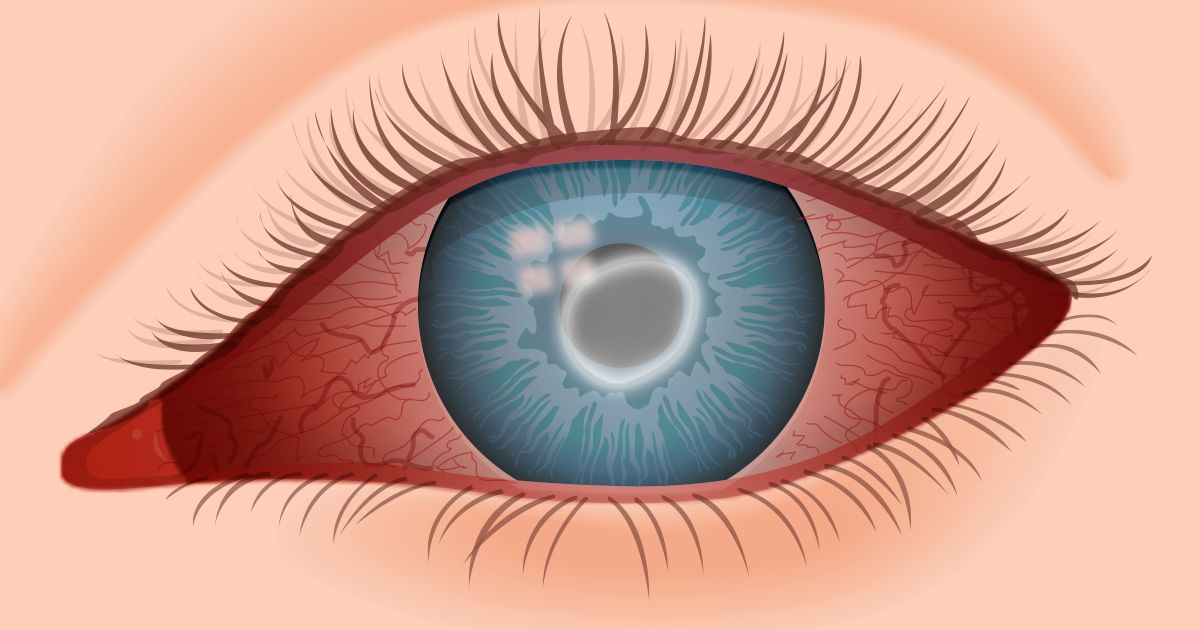
Advanced Acanthamoeba keratitis can cause a white “ring” to cover the iris, as well as redness in the white of the eye.
To help prevent Acanthamoeba keratitis and all contact lens-related eye infections, be sure to carefully follow the lens care, handling and wearing instructions you receive from your eye doctor.
What is Acanthamoeba keratitis?
Acanthamoeba are naturally occurring amoeba (tiny, one-celled animals) commonly found in water sources, such as tap water, well water, swimming pools, hot tubs, and soil and sewage systems.
If these tiny parasites infect the eye, Acanthamoeba keratitis may result along with causing problems in other structures like the sclera.
An estimated 85% of U.S. Acanthamoeba keratitis cases affect contact lens users, according to the Centers for Disease Control and Prevention (CDC). In developed countries, the incidence of Acanthamoeba keratitis is approximately one to 33 cases per million contact lens wearers.
Acanthamoeba outbreaks among contact lens wearers
In the past, Acanthamoeba keratitis outbreaks among contact lens wearers in the U.S. have led to investigations by the CDC. In some cases, safety warnings were issued for certain contact lens solution products. In other cases, products were completely removed from the market.
What causes Acanthamoeba keratitis?
Factors and activities that increase the risk of contracting Acanthamoeba keratitis include using contaminated tap or well water on contact lenses, using homemade solutions to store and clean contacts, wearing contact lenses in a hot tub and swimming or showering while wearing lenses.
A dirty lens case also can be a source of Acanthamoeba infection.
Some research also shows that “no-rub” lens care systems may result in less effective contact lens cleaning and disinfection. This is why eye doctors often still recommend rubbing your contact lenses during cleaning, even if you use a no-rub solution.
But regardless of the cause of the increase, Acanthamoeba can be killed with proper cleaning. In the end, good contact lens hygiene is an effective way to prevent Acanthamoeba keratitis.
SEE RELATED: Eye worms

Acanthamoeba is a single-cell organism that exists in nature in two forms: an active, growing form (left) and a dormant, stress resistant cyst (right). (Images: Morales, Khan and Walochnik [CC BY 2.0], via Wikimedia Commons)
How do you know if you have Acanthamoeba keratitis?
Symptoms of Acanthamoeba keratitis can include:
Eye pain after removing your contact lenses
Tearing
A feeling that something is in your eye
With these types of symptoms, you should always contact your eye doctor. But keep in mind that Acanthamoeba keratitis is often difficult for your eye doctor to diagnose at first, because its symptoms are often similar to pink eye symptoms and those of other eye infections.
Diagnosis of keratitis often occurs once it is determined that the condition is resistant to antibiotics used to manage other infections. A “ring-like” ulceration of your corneal tissue may also occur.
If not promptly treated, Acanthamoeba keratitis can cause permanent vision loss or require a corneal transplant to recover lost vision.
How you can reduce the risk of getting Acanthamoeba keratitis
There are several recommended ways to reduce the chance of getting this sight-threatening condition — and, in fact, any type of contact lens-related eye infection:
- Follow your eye doctor’s recommendations regarding care of your contact lenses. Use only products that your eye doctor recommends.
- Never use tap water with your contact lenses. The FDA has recommended that contact lenses should not be exposed to water of any kind.
- Do not swim, shower or use a hot tub while wearing contacts. If you do decide to wear your lenses while swimming, wear airtight swim goggles over them.
- Soak your lenses in fresh disinfecting solution every night. Don’t use a wetting solution or saline solution that isn’t intended for disinfection.
- Always wash your hands before handling your lenses.
- Always clean your contacts immediately upon removal (unless you are wearing disposable contact lenses that are replaced daily). To clean your lenses, rub the lenses under a stream of multipurpose solution – even if using a “no-rub” solution – and store them in a clean case filled with fresh (not “topped off”) multipurpose or disinfecting solution.

Clean and sterilize your contact lens case to avoid Acanthamoeba contamination.
Take care of your contact lens case
Cleanliness and proper care are equally important for contact lens cases.
It’s important to clean, rinse and air-dry your contact lens case immediately after removing your lenses from the case. Discard the old solution and rub the inside wells of the case with clean fingers for at least five seconds. Then fill the case with multipurpose solution or sterile saline (not tap or bottled water), dump this out, and store the case upside down with the caps off.
As an extra precaution, you might want to consider sterilizing your empty contact lens case once a week by submerging it in boiling water for a few minutes.
It is recommended to discard and replace your contact lens case monthly or, at a minimum, every three months to help prevent contamination.
Prevention is your best defense against Acanthamoeba keratitis by using proper hygiene during contact lens use and care. And if you notice any unusual eye symptoms that might indicate an infection, immediately consult your eye doctor.