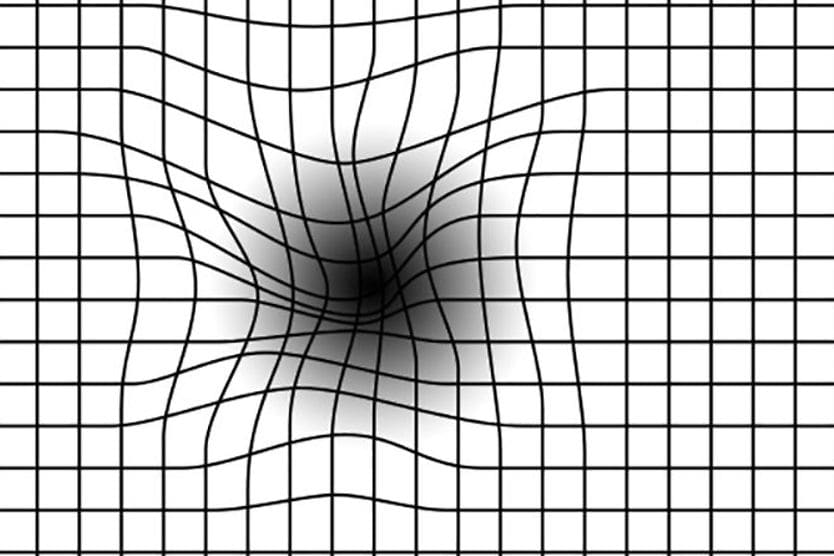
It can be very scary if vision in one of your eyes suddenly becomes blurry and distorted, as may happen with the development of a macular hole.
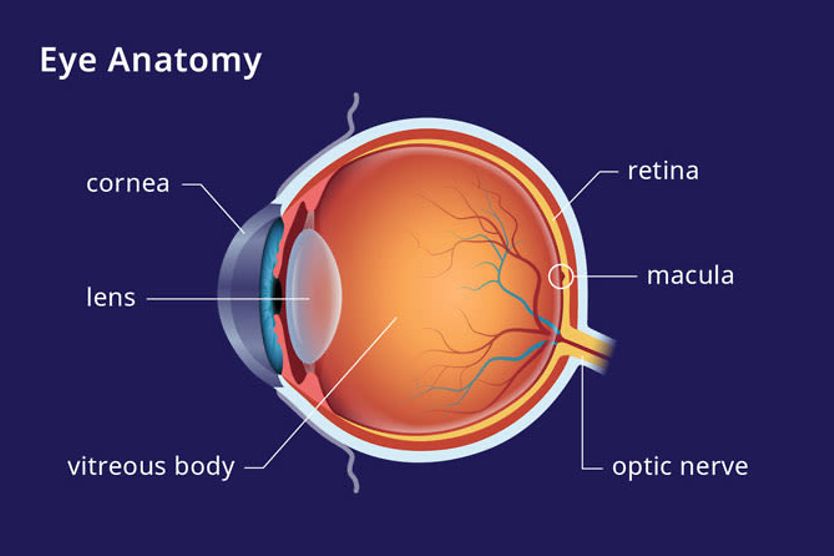
To understand how macular holes occur, it's important first to know a little about eye anatomy. The macula, where holes sometimes develop, is a very small spot in the center of the back of the eye (retina). Light focuses to a sharp point at the macula, which is the only area of the eye that sees crystal clear, color vision (such as for driving or recognizing faces).
The macula is also full of light-sensitive cells called cones. The entire rest of the retina is made up of photosensitive cells called rods that see black and white shading, shape and movement (such as for night vision and side vision).
Because macular holes are often related to aging processes, they are more likely to develop if you are over age 60. Also, women have a slightly higher risk for macular holes than men.
When a macular hole develops, many people notice a sudden decrease in vision in one eye.
Macular holes, tears and cysts are not the same as another age-related eye disease called age-related macular degeneration (AMD), which also occurs more frequently among those over age 60.

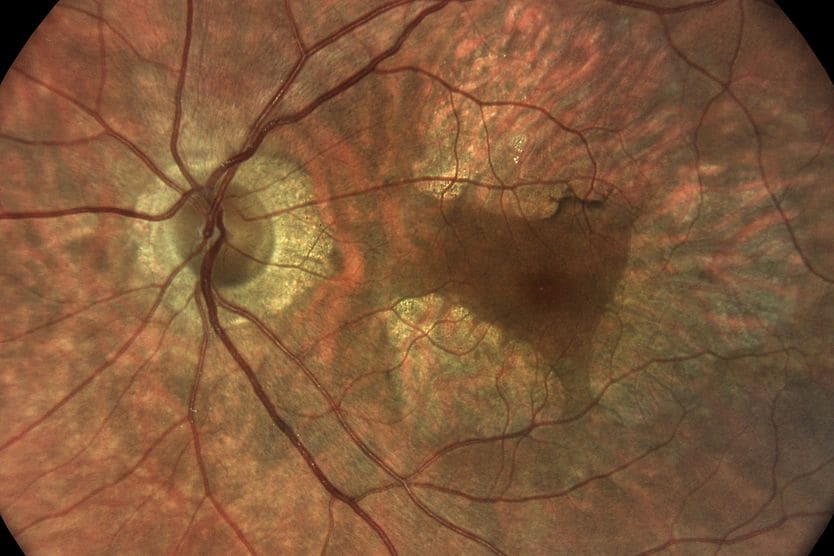
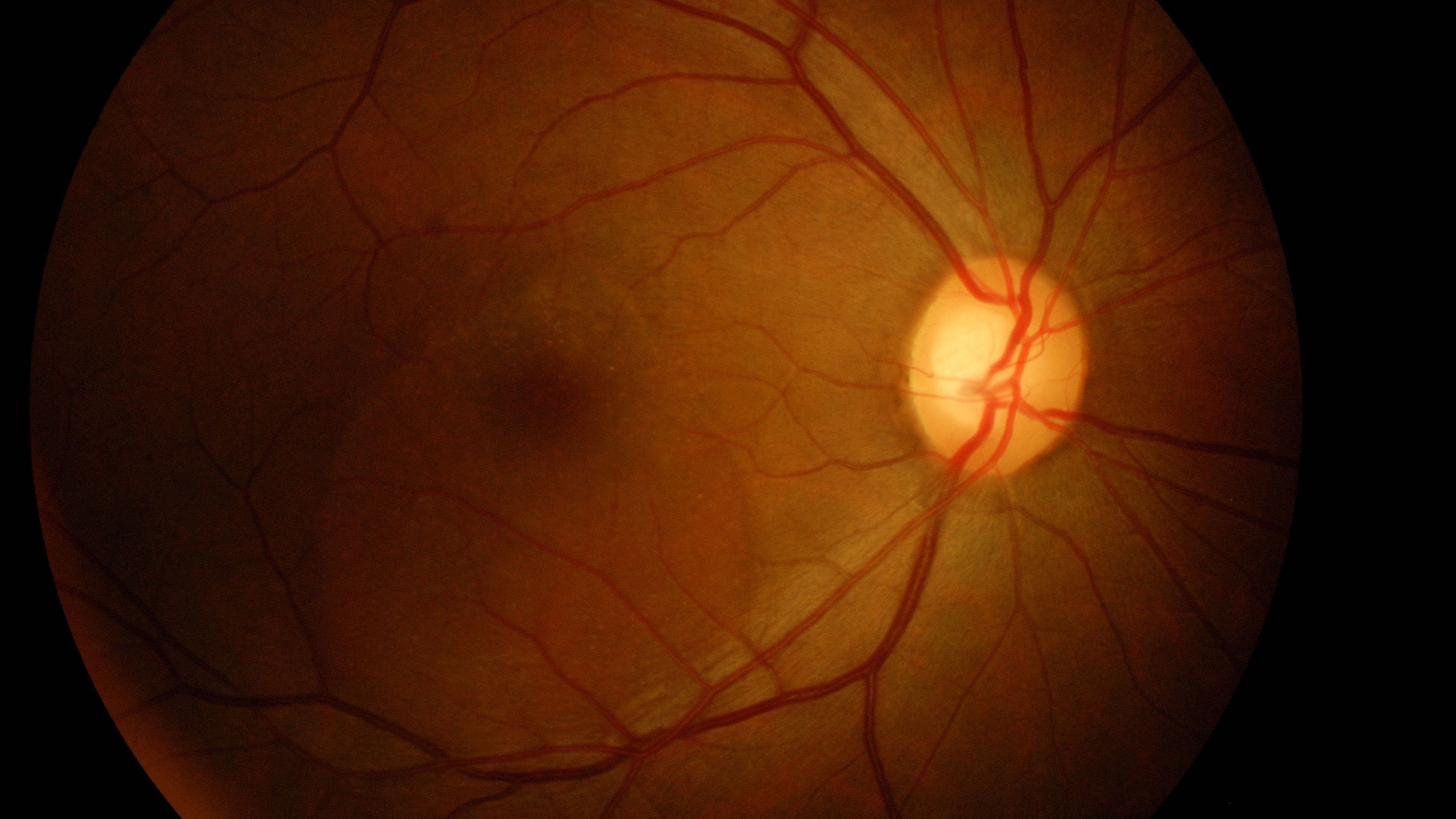
"Macular hole on the right eye" by Hanay is licensed under CC BY-SA 3.0. Via Wikimedia Commons.
Macular holes can occur due to:
- Vitreous shrinkage and/or separation
- Diabetic eye disease
- High amounts of nearsightedness (myopia)
- Macular pucker
- A detached retina
- Best disease (inherited condition causing macular damage)
- Eye injury
Macular hole caused by vitreous shrinkage and/or separation
The back of your eye is filled with a rather thick, gel-like material called the vitreous humor (also called the vitreous body or the vitreous) that helps your eye keep its shape. The clear vitreous shrinks and becomes more liquid with aging, causing it to slosh around.
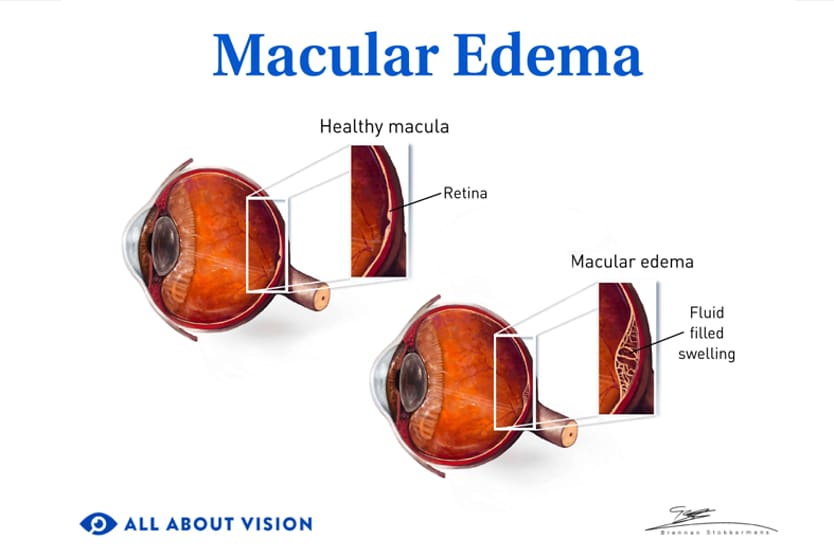
Because the vitreous is attached to the retina with tiny strands of cells, it can pull on the retina as it shrinks. Sometimes, this shrinkage can tear off a small piece of the retina, causing a hole. If this missing piece of retina is in the macula, it's called a macular hole.
Another direct cause of macular holes due to vitreous shrinkage is when the strands stay attached to the retina and break away from the vitreous. These strands can contract around the macula, causing the macula to develop a hole from the traction.
In either case, fluid develops where the vitreous shrinks to fill the spaces. This fluid can seep into a macular hole, causing blurred and distorted vision.
Macular hole progression
Left untreated, a macular hole can worsen over time. Macular holes occur in three stages:
- Foveal detachments – About 50% worsen without treatment.
- Partial-thickness holes – About 70% worsen without treatment.
- Full-thickness holes – Many worsen without treatment.
A macular hole sometimes can resolve without intervention, but the majority should be treated to prevent permanent vision loss.
Macular hole surgery and repair
A vitrectomy is the more common treatment for macular holes. During this surgery, a retinal specialist removes the vitreous gel to stop it from pulling on the retina. Then the specialist inserts a mixture of air and gas into the space once occupied by the vitreous.
This bubble of air and gas puts pressure on the edges of the macular hole, allowing it to heal.
While the bubble is doing its job, you must lie face down so that the bubble stays in the right place in the eye, sometimes for as long as two to three weeks. Although it can be challenging to stay still for so long, this approach is necessary for you to achieve optimal vision after treatment.
The gas/air bubble gradually goes away over time, and natural eye fluids take its place while the hole is healing.
Risks of vitreous surgery include infection and retinal detachment, both of which are typically treatable. The more common risk, however, is cataract development. Cataracts commonly occur rather quickly after a vitrectomy, but they can be removed once the eye has healed.
If you have had surgery for a macular hole using a gas bubble, you may not be able to travel by air for several months, because the gas can expand with pressure changes, which could cause eye damage.
People who have had a macular hole in one eye have a higher chance (about 10%) of developing a macular hole in their other eye at some time in their life. Therefore, you should have comprehensive eye exams as determined by your eye doctor to catch problems early.